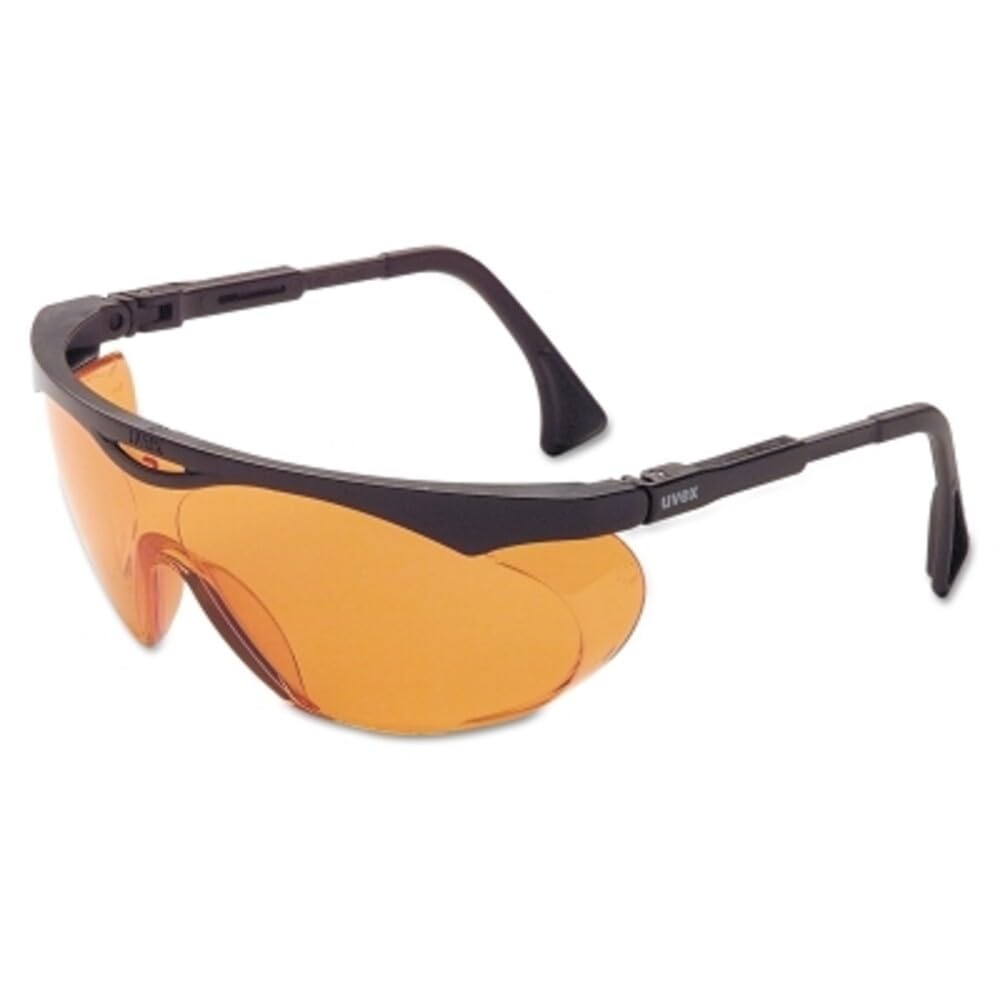
If you want to try blue light blocking glasses for sleep, get deep amber lenses. The Spectra479 amber glasses (about $36) are the best overall, with brand-tested blocking of 99.9% of light from 280 to 510nm. The Uvex Skyper SCT-Orange (about $17) is the budget pick. Just know the sleep evidence is weak.
Let's start with that awkward part. The evidence that blue light blocking glasses improve sleep is thin. A 2023 Cochrane review of 17 randomized trials (619 people) found that blue-light filtering lenses probably make little or no difference to eye strain from computer use, and their effect on sleep quality was uncertain. The American Academy of Ophthalmology doesn't recommend any special eyewear for computer use. (This is general information, not medical advice.)
So why write a buying guide at all? Because the sleep question isn't fully closed, and the glasses that have the best case are a specific type: deep amber or orange lenses worn for the last couple of hours of the evening. A small 2018 trial of people with insomnia found that this kind of lens added about 28 minutes of sleep compared with clear placebo lenses. A 2025 meta-analysis of sleep-tracker data found smaller, non-significant gains. That's a "maybe, for some people" result. Our full breakdown of whether blue light glasses work goes through the studies.
If you want to try a pair anyway, at least buy the kind that blocks a lot of blue light. Clear "computer glasses" with a faint coating are the weakest bet of all. The four below all use amber or orange lenses, and I've picked them on lens specs, price, and buyer reviews on Amazon US.
Quick comparison
| Glasses | Lens claim (per brand) | Best for | Fits over prescription? | Price |
|---|---|---|---|---|
| Spectra479 Amber | 99.9%+ blocked, 280-510nm | Best overall | No | about $36 |
| Uvex Skyper SCT-Orange | 98% of blue light absorbed | Budget | Often, yes (wraparound) | about $17 |
| Spectra479 Fit-Over | 99.9%+ blocked, 280-510nm | Prescription wearers | Yes | about $40 |
| Swanwick Night Swannies | 99% of blue and green light | Normal-looking frames | No | about $130 |
Prices are Amazon US prices at the time of writing and they move around.
Spectra479 amber glasses: best overall
ASIN: B076YQP6SB
Spectra479 make sleep glasses and nothing much else, which shows in the listing. They say the lenses are tested to block 99.9% or more of light between 280 and 510nm (UV included). That covers the blue-green band that does the most to suppress melatonin. The lenses are deliberately bright rather than dark, so you can still read and see faces in a dim room.
This listing is the medium adult size. If you have a bigger head, Spectra479 point you to their original, larger frame instead. It has a 4.6-star average from about 600 reviews. That's a smaller review base than the Uvex pair below. At about $36 it costs twice as much, but it's built for evening wear rather than for a workshop.
If you don't wear glasses already and want one pair that does the job, start here.
Uvex Skyper SCT-Orange: best budget
ASIN: B000USRG90
These are safety glasses. Honeywell's Uvex brand sells them for computer work, and they turned into a cheap favorite with the sleep crowd because the SCT-Orange lens is so strong. Uvex says it absorbs 98% of blue light.
They look like what they are: wraparound safety eyewear. The temples adjust for length, and the lens tilts to three positions. The wrap shape also means less light sneaks in at the sides. Plenty of buyers wear them over regular glasses, though that depends on your frames. At about $17 with a 4.2-star average from roughly 7,500 reviews, this is the low-risk way to find out whether amber lenses make any difference to your evenings.
One thing to ignore: the listing says the lens helps prevent cataracts and macular degeneration. The AAO says there's no evidence that light from screens damages your eyes, so there's nothing for the glasses to prevent there.
Spectra479 Fit-Over: best for prescription wearers
ASIN: B08176FSKZ
If you wear prescription glasses, most amber glasses are no use to you unless you pay for custom tinted lenses. The Fit-Over goes on top of your own glasses or reading glasses. You can also wear it on its own.
The lens spec matches the regular Spectra479: 99.9%+ blocked from 280 to 510nm, by the company's testing, with a bright rather than dark tint. It's about $40 with a 4.5-star average from around 500 reviews. Fit-overs are bulky, and thick or very wide frames can be a squeeze. Measure your widest pair before ordering.
Swanwick Night Swannies: best premium
ASIN: B010B5GUH0
The Night Swannies are the pair you could wear in front of guests without explaining yourself. The frames are cellulose acetate, the lenses are CR-39 (the material used in prescription glasses) with an anti-reflective coating, and Swanwick claims 99% blocking of blue and green light. The brand suggests wearing them for one to two hours before bed.
The problem is the price. At about $130, they cost more than three times the Spectra479, and the lens claim is in the same range. You're paying for the frame and the finish. They have a 4.4-star average from about 1,500 reviews.
What to look for
Lens color comes first. If the glasses don't look clearly orange or amber when you hold them up, they aren't blocking much blue light. Clear lenses with a coating block the least.
Treat percentage claims with care. Every figure in this guide comes from the brand's own listing. None of them has been independently verified, and none of them proves a sleep benefit. They're useful for comparing one amber pair against another and not much more.
For prescription wearers, it's fit-over frames or custom tinted lenses. Fit-overs are cheaper and simpler.
These are evening glasses. Everything looks orange through them, so they're no good for color work or most daytime tasks. People who try them typically put them on about two hours before bed, which matches the timing in the trials, and take them off at lights out. Pair them with a consistent bedtime routine rather than relying on them alone.
Your phone's night mode only changes the light from that one screen. Glasses affect everything you look at, including ceiling lights and the TV. But if the real problem is that you can't stop scrolling before bed, glasses won't fix that. The content keeps you up as much as the light does.
Don't forget the morning end
Light in the morning matters for your body clock as much as darkness at night. If your phone is your alarm, it's also the reason it sits on your nightstand. A sunrise alarm clock takes over the alarm and gives you a light cue at the same time. If streetlights are the problem at night, blackout curtains do more than any pair of glasses.
Blue light blocking glasses: frequently asked questions
Do blue light blocking glasses actually improve sleep?
The evidence is weak and mixed. The 2023 Cochrane review rated the effect on sleep as uncertain. The best result comes from a 14-person insomnia trial in 2018, which found about 28 minutes of extra sleep with amber lenses. A 2025 meta-analysis using sleep-tracker data found small improvements that weren't statistically significant. If you sleep fine already, don't expect a difference.
Do blue light glasses help with eye strain?
Probably not. Eye strain from screens comes from staring at one distance and blinking less, not from the blue light. The AAO recommends the 20-20-20 rule instead: every 20 minutes, look at something 20 feet away for 20 seconds.
Can I wear blue light blocking glasses over my prescription glasses?
Yes. The Spectra479 Fit-Over is designed for it, and the wraparound Uvex Skyper fits over many frames. Both are bulkier than standalone glasses.
Do amber glasses change how colors look?
Yes, everything takes on a warm orange tint. Most people stop noticing after a while, but don't wear them for photo editing or anything color-critical.
Sources
- Singh S, et al. "Blue-light filtering spectacle lenses for visual performance, sleep, and macular health in adults." Cochrane Database of Systematic Reviews, 2023.
- Shechter A, et al. "Blocking nocturnal blue light for insomnia: A randomized controlled trial." Journal of Psychiatric Research, 2018.
- Luna-Rangel FA, et al. "Efficacy of blue-light blocking glasses on actigraphic sleep outcomes." Frontiers in Neurology, 2025.
- American Academy of Ophthalmology. "Are Blue Light-Blocking Glasses Worth It?" and "Should You Be Worried About Blue Light?"