The best sunrise alarm clock for most people is the Philips SmartSleep HF3520, about $107. It has a colored red-to-white sunrise, a sunset mode and FM radio, with no app or subscription. Want a sound machine too? Get the Hatch Restore 3 (about $170). A generic $15-30 clock is the cheap way to test the idea.
A sunrise alarm clock simulates dawn by gradually increasing light over 20-30 minutes before your alarm goes off. Instead of being jolted awake by a noise while you're still in deep sleep, your brain gets a slow light signal first. In small lab studies, a simulated dawn boosted the morning cortisol rise and left people more alert and quicker on tests after waking. (This is general information, not medical advice.)
That's the theory. I've gone through the specs and a lot of buyer reviews for the sunrise clocks you can actually get on Amazon in the US, and two stand out: the Philips SmartSleep Wake-up Light HF3520 for most people, and the Hatch Restore 3 if you also want a sound machine.
Our picks
1. Philips SmartSleep Wake-up Light HF3520: best overall
Philips has been making wake-up lights longer than most of the brands now crowding Amazon, and the HF3520 is the one I'd point most people to. Around $107, 4.3 stars from roughly 14,800 reviews.
The sunrise is colored, so it moves from a dim red through orange to bright light rather than just turning up a white bulb. There's also a sunset mode that dims the light down at night. You get five natural wake-up sounds plus FM radio, tap snooze, and a display that dims automatically so it isn't glaring at you at 2am. It doubles as a bedside reading lamp with 20 brightness settings.
What I like most is what it doesn't have: no app, no account, no subscription. You set it once and it works.
The downside is that it's an older design. If you want phone control or a big library of sleep sounds, look at the Hatch.
2. Hatch Restore 3: best sunrise clock with a sound machine
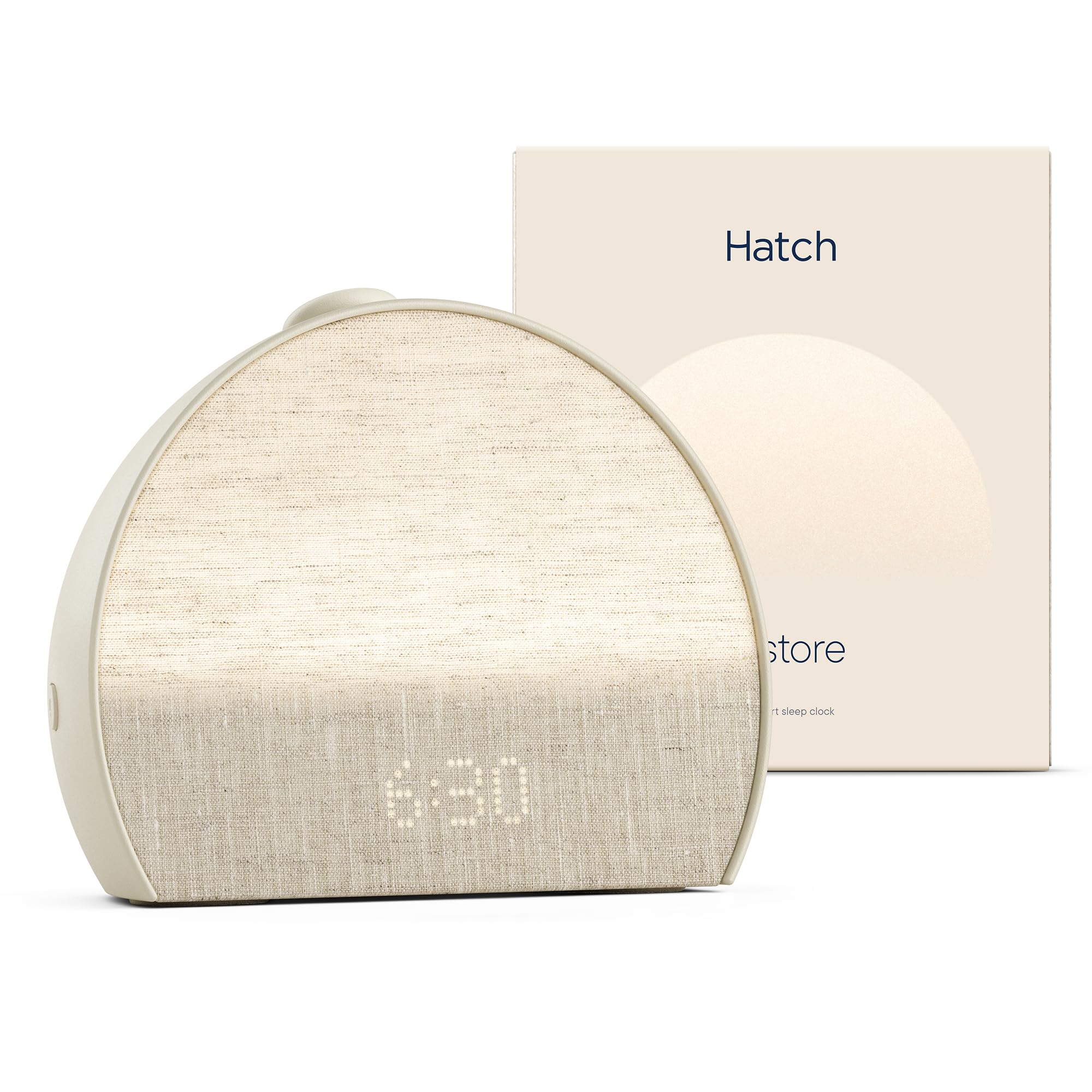
The Hatch Restore 3 is a sunrise alarm, sleep sound machine, and dimmable clock in one. Around $170, 4.2 stars from about 3,300 reviews.
It's built around a bedtime routine: wind-down light and audio at night, sleep sounds through the night (Hatch lists 80+), and a sunrise wake-up in the morning. If you already run a white noise machine next to a separate alarm clock, this replaces both.
The catch is the subscription. The listing says you get a 30-day free trial of Hatch+, then it's $5.99 a month or $59.99 a year for the premium content and features. The basic sunrise alarm doesn't need it, but a good chunk of the sound library does. Check Hatch's current pricing before you buy, and factor it in. Over two years, Hatch+ costs about as much as the clock.
| Philips HF3520 | Hatch Restore 3 | |
|---|---|---|
| Price (approx.) | $107 | $170 |
| Rating | 4.3 (14,800 reviews) | 4.2 (3,300 reviews) |
| Colored sunrise | Yes | Yes |
| Sunset / wind-down | Yes | Yes |
| Sounds | 5 wake-up sounds + FM radio | 80+ sleep sounds (many need Hatch+) |
| Subscription | None | Optional Hatch+ |
| Reading lamp | Yes, 20 brightness settings | No |
How sunrise alarms work
Your circadian rhythm responds to light before anything else. When photoreceptors in your retina detect increasing light, your brain starts suppressing melatonin and producing cortisol. This is the natural process that wakes you up on a summer morning when the sun comes through the curtains.
A sunrise alarm clock replicates this artificially. The light starts dim (usually warm orange or red) and gradually brightens, mimicking the color temperature shift of an actual sunrise. By the time the audible alarm goes off, you've already been brought closer to wakefulness by the light.
This works particularly well alongside blackout shades or blackout curtains. If your room is properly dark for sleeping, the sunrise clock is the only light source in the morning, which gives your brain a clear and consistent signal.
Sunrise alarm vs normal alarm: what's the difference?
A standard alarm jolts you awake at a random point in your sleep cycle. If you're in deep sleep when it goes off, you get sleep inertia: that foggy, groggy feeling that takes 20-30 minutes to shake.
A sunrise alarm starts the waking process gradually. By the time the audible alarm sounds, you're more likely to be in a lighter sleep stage, and the grogginess is reduced.
The difference is most noticeable in winter. In December the sun doesn't come up until after 7am across most of the US, and closer to 8am in cities on the western edge of a time zone, like Detroit or Indianapolis. If you're up at 6:30, your body gets no light cue at all.
What to look for
Brightness matters. Light intensity is measured in lux, and cheap clocks often top out at a level that's fine as a night light but too dim to do much as a wake-up signal. For context, a brightly lit office is about 300-500 lux. Manufacturers don't always publish a lux figure, so buyer reviews mentioning "not bright enough" are a useful warning sign.
Color temperature matters too. Better clocks shift from warm red/orange to bright white as they brighten, like real dawn. Cheap ones just go from dim white to bright white, which feels less natural.
Sunrise duration on most clocks is adjustable. 20-30 minutes works for most people. Shorter than 15 and the transition is too abrupt.
A sunset mode is worth having if you scroll your phone in bed. It gives you a slowly dimming warm light to wind down with instead of a bright screen.
Always have an audible alarm as backup. The light alone might not wake a deep sleeper, especially at first.
Budget options (under $30)
Plenty of no-name brands on Amazon sell sunrise clocks for $15-30. The light is usually dimmer, the color simulation is basic, and build quality varies a lot. They're a reasonable way to find out whether a sunrise alarm works for you before spending $100+. If the concept clicks, upgrade later.
You'll also see Lumie in a lot of sunrise clock roundups. It's a UK brand and its clocks are hard to find in the US, which is why it isn't on this list.
How much should you spend?
| Budget | What you get | Who it's for |
|---|---|---|
| Under $30 | Basic light, one color, dimmer | Testing the concept |
| $80-120 | Colored sunrise, sunset mode, reliable build | Most people (Philips HF3520) |
| $150+ | Sound machine, app control, routines | People who want one device for sleep and waking (Hatch Restore 3) |
Do they actually work?
For most people, yes. The effect is strongest in winter, when it's still dark at your alarm time. In summer, when it's light before 6am in much of the country, the clock adds less because the sun is already doing the job (though if you have blackout shades, the clock is your controlled light source year-round).
People who benefit most: anyone who struggles to wake up in the dark, shift workers moving between schedules, and anyone using blackout curtains or shades that cut out natural morning light.
People who won't notice much difference: those who already wake up naturally with daylight and don't block it out.
Using it with a sleep mask
If you sleep with a mask for total darkness, the sunrise clock still works. Set it to start 30 minutes before your alarm. When the light gets bright enough, it comes through thinner masks or you stir and pull the mask off. Some people set a gentle pre-alarm sound a few minutes in to prompt mask removal, then let the light do the rest.
For the science on why blocking light helps sleep, our sleep mask article has the research.
FAQ
Are sunrise alarm clocks worth the money? If you dread dark mornings and nothing else has worked, yes, they're worth trying. The Philips HF3520 at around $107 is the safe choice. It's not a gimmick, but it's also not magic: it makes waking up easier, it doesn't fix short sleep.
Philips vs Hatch: which is better? For a pure wake-up light, Philips. It's cheaper, has more reviews, and needs no subscription. The Hatch Restore 3 makes more sense if you'd otherwise buy a separate sound machine, and if you're OK paying for Hatch+ or living without the premium sounds.
Can a sunrise alarm clock help with SAD? It can help with dark-morning grogginess, but it isn't a treatment for seasonal affective disorder. Light therapy for SAD usually means a dedicated 10,000-lux light box used under a doctor's guidance. Talk to your doctor if you think you have SAD.
Do sunrise alarm clocks work in summer? You'll notice them less because natural light is already there early. But if you use blackout shades or curtains, the clock stays your main morning light source whatever the season.
What if the light wakes my partner? It might. The light fills the room, not just your side of the bed. If your partner sleeps later than you, they'll need a sleep mask, or you can put the clock on your side of the bed angled away from them.
Sources
- Thorn L, et al. "The effect of dawn simulation on the cortisol response to awakening in healthy participants." Psychoneuroendocrinology, 2004.
- Thompson A, et al. "Effects of dawn simulation on markers of sleep inertia and post-waking performance in humans." European Journal of Applied Physiology, 2014.
- Hilditch CJ, McHill AW. "Sleep inertia: current insights." Nature and Science of Sleep, 2019.
- National Institute of Mental Health. "Seasonal Affective Disorder."