Your house smells after cooking because most of the odor isn't in the air anymore. Frying and searing throw out fine oil droplets that settle on counters, curtains and couches, then release smell for hours or days. A spent carbon filter, a range hood switched on too late and an open floor plan all make it worse.
Range hood on, window open, stovetop wiped, and the kitchen still smells like last night's spaghetti sauce at breakfast? It's not in your head, and once you know the reasons the fixes make a lot more sense.
If you want the full list of practical fixes, our main guide to getting rid of cooking smells covers everything in order.
The smell is mostly particles
When you cook, you don't only produce smell. You produce a fine mist of oil droplets, fat particles and volatile organic compounds. The EPA lists cooking among the main sources of indoor particulate matter. Frying is the worst for this, because hot oil throws microscopic droplets in every direction. Some go up into the range hood (if it's on). Most don't.
Those particles land on everything nearby: countertops, the backsplash, the wall behind the stove, the ceiling above it. The ones that travel further reach curtains, couch cushions, a sweater on the back of a chair. Once they land, they slowly release volatile compounds back into the air. That's the lingering smell. It isn't floating around the room anymore. It's on your surfaces.
Researchers at Health Canada and Lawrence Berkeley National Laboratory measured this in a 2018 study in Building and Environment (free PDF). Fine particle (PM2.5) levels jumped during cooking, and running the kitchen exhaust fan after the cooking stopped brought them down faster than switching it off. Opening a window clears the air, but it doesn't clean what has already settled.
Your range hood isn't doing what you think
Two problems here.
First, most people turn the hood on after they notice the smell. By then the kitchen air is already loaded. The hood needs to be running before you start cooking so it catches vapor as it rises from the pan, and it needs to keep running for at least 15 minutes after you finish.
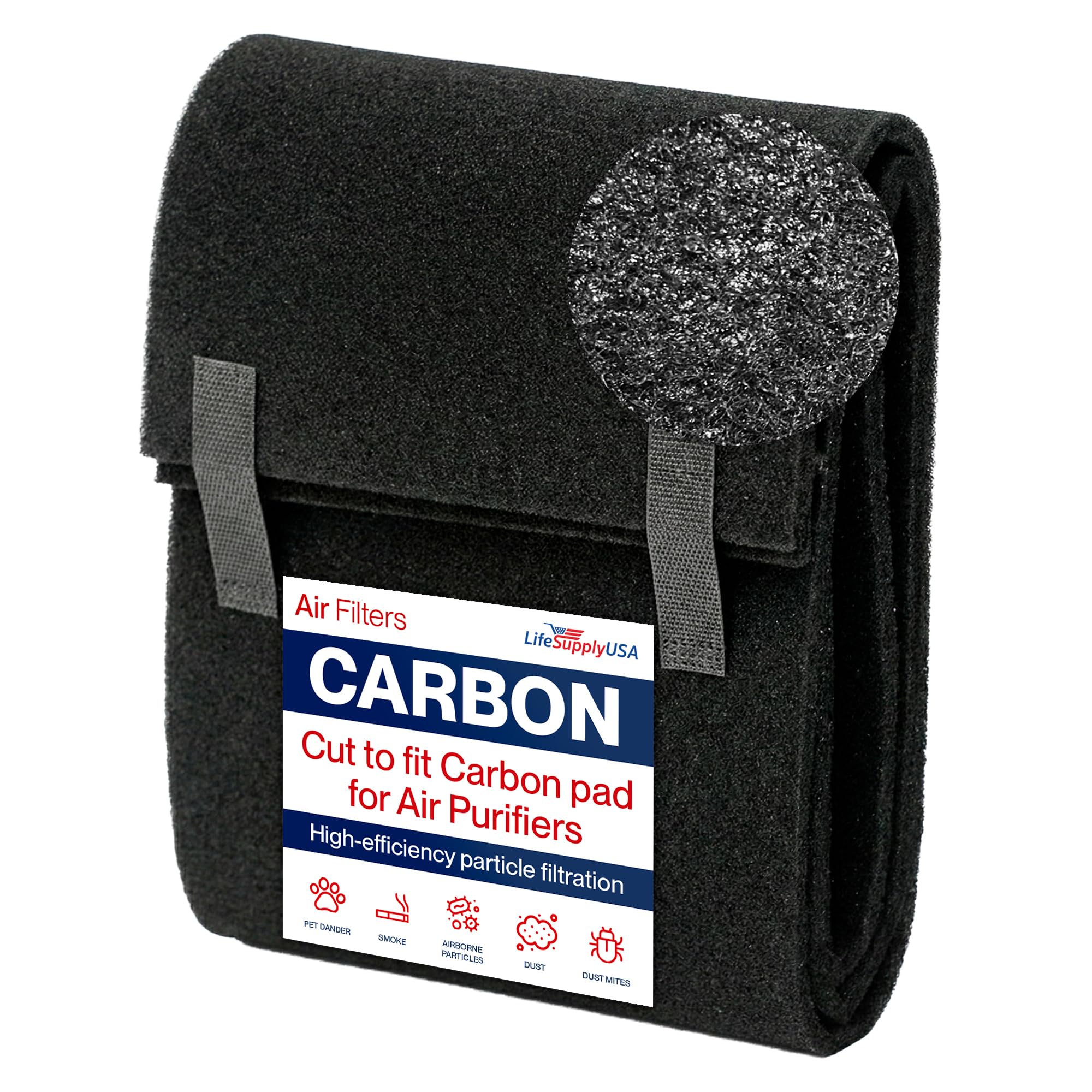
Second, if you have a recirculating hood (it doesn't vent outside; it pulls air in and blows it back into the kitchen), it uses a carbon filter to absorb odors. The Home Ventilating Institute says these hoods provide no real ventilation, so the filter is doing all the work, and it wears out. After two to four months of regular cooking the carbon is saturated, and the hood moves air but removes nothing.
Plenty of people have never replaced the carbon filter. Some don't know it's there. A cut-to-fit carbon sheet costs about $18 and takes a few minutes to trim and swap in, as long as your hood takes a flat pad rather than a molded cartridge.
Open floor plans let smells spread
Older houses with separate kitchens have one thing going for them: you can shut the door. In an open kitchen and family room, cooking particles drift straight into the space where the couch, rug and curtains soak them up.
The stack effect makes it worse in houses with stairs. Warm air from cooking rises and carries particles up the stairwell. That's why you can smell dinner in the bedroom even though you cooked downstairs.
Closing doors between the kitchen and living areas while you cook is the simplest fix nobody uses. If your layout doesn't allow that, we've written a specific guide on stopping cooking smells going upstairs.
Soft furnishings absorb and re-release odor
This is the one people don't think about. Curtains, couch fabric, pillow covers and rugs are porous. They absorb volatile organic compounds from cooking and release them slowly over days.
So the kitchen can smell fine while the living room still smells like cooking. The fabrics caught the particles when the smell first spread, and now they're leaking it back out.
Fixes:
- Wash removable covers regularly: pillow covers, throws, dish towels
- Spray upholstery you can't wash with an odor eliminator spray. Zero Odor says its formula bonds with odor molecules instead of covering them with fragrance, and it's made for fabric and upholstery
- Pull back or tie up the curtains nearest the kitchen while you cook. Less exposed fabric means less absorption
Activated charcoal bags near the couch or curtains absorb some odor from the air before it reaches the fabric. Moso rates each 200g bag for spaces up to 90 square feet. It won't stop everything, but it reduces buildup.
Some smells need more than airflow
Ventilation fixes what's in the air. It doesn't touch what has already settled on surfaces and soaked into fabric.
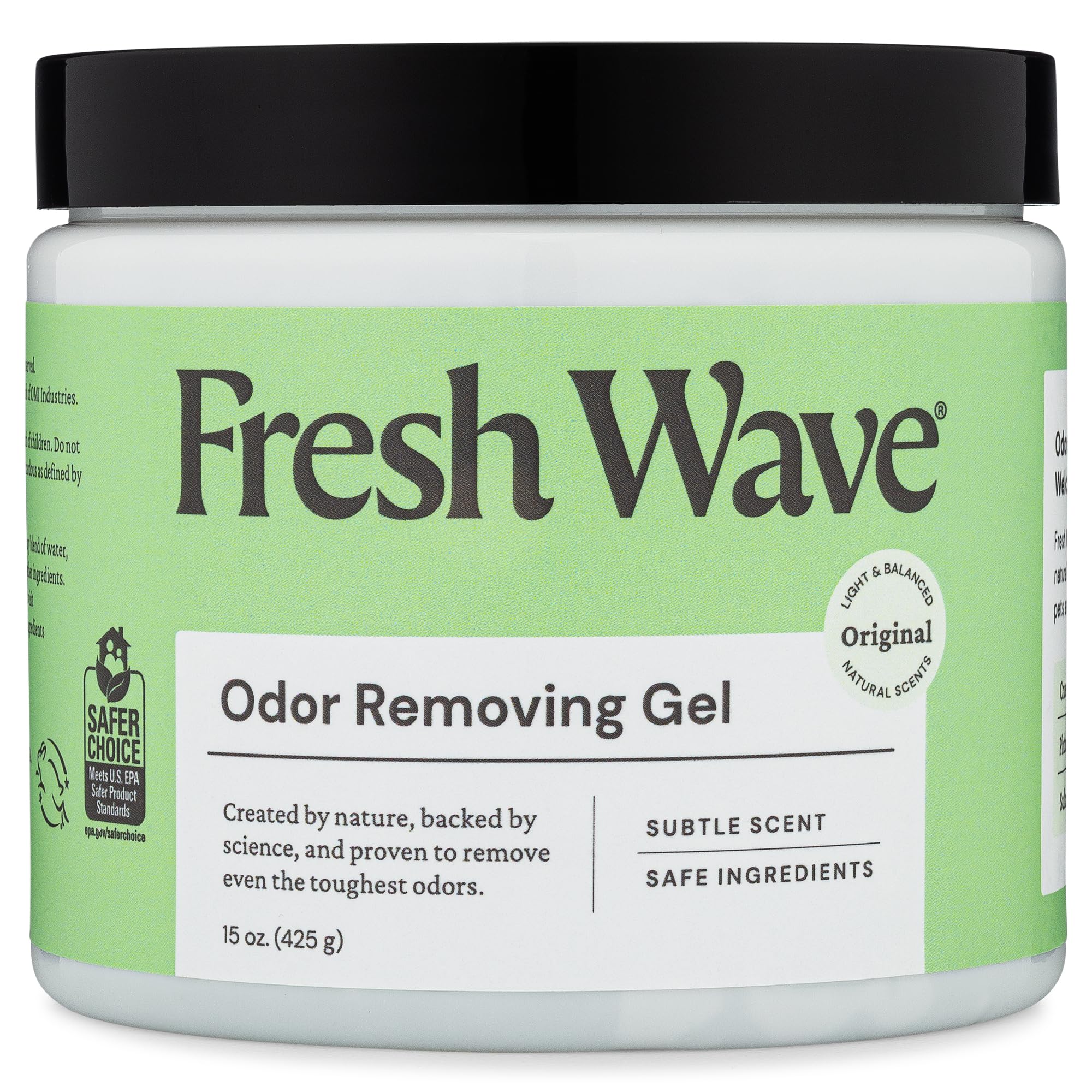
For that you need either an odor eliminator spray on the fabric itself, or something that keeps absorbing odor from the air over time, like Fresh Wave odor removing gel. Fresh Wave is a plant-based gel (lime, pine needle, clove, anise and cedarwood oils) that sits on a counter or shelf, and the company says one 15 oz jar lasts 30 to 60 days. Regular kitchen cleaner removes grease but does little for the compounds causing the smell.
When it's not cooking: ruling out other sources
If the smell is still there after a day or two without cooking, it might not be cooking at all.
Drains. Food residue in the trap under the sink rots. Run hot water and dish soap through it. If the smell persists, the trap may need cleaning out, or it may have dried out (this happens in rarely used sinks and lets sewer gas through).
Damp or mold. A musty, stale smell that gets worse in humid weather. Check behind appliances, under the sink and around window frames. The EPA's mold guidance covers cleanup and when to call in help.
The dishwasher. Food trapped in the filter or the door gasket goes rancid. Pull the filter out and clean it, then wipe the rubber seal around the door.
The fridge. Spills on back shelves, especially raw meat juice.
Old cooking oil. Oil reused too many times breaks down and smells stale or fishy even when cold.
What to try first
If you're not sure where to start:
- Replace the carbon filter (if you have a recirculating hood)
- Spray fabrics near the kitchen with an odor eliminator after cooking
- Wash any washable soft furnishings near the kitchen
- Put charcoal bags near the stove and in the rooms next to the kitchen
- Close doors between the kitchen and living spaces while you cook
Why does my house smell after cooking: frequently asked questions
Why can I still smell cooking after ventilating the kitchen?
Because most of the lingering smell isn't in the air anymore. It's sitting on surfaces and fabrics as aerosolized oil particles and volatile organic compounds. Ventilation clears the air but doesn't touch what has already landed on your countertops, curtains or couch cushions, and those deposits release smell slowly over hours or days.
How long should I run the range hood after cooking?
At least 15 minutes, ideally 20. Particle levels stay high for a while after the burners go off, and research on kitchen exhaust found that keeping the fan running after cooking clears them faster. Switching the hood off the moment you plate up leaves that air in the house.
Why does cooking smell travel upstairs?
Warm air rises, and warm cooking vapor carries odor compounds up the stairwell through the stack effect. It's worse in open-plan houses where no door separates the kitchen from the hallway. Closing the kitchen door while you cook and putting a draft stopper on the gap underneath is the cheapest fix.
Could the smell be something other than cooking?
Possibly. A sink drain with food residue in the trap can smell a lot like old cooking. So can a dishwasher with food stuck in the filter, old oil left in a pan, or a spill at the back of the fridge. If the smell hangs on for days and nothing else works, check these before blaming the cooking.
Sources
- Dobbin NA, Sun L, et al. "The benefit of kitchen exhaust fan use after cooking: An experimental assessment." Building and Environment, 2018.
- EPA. "Volatile Organic Compounds' Impact on Indoor Air Quality." US Environmental Protection Agency.
- EPA. "Indoor Particulate Matter."
- EPA. "Mold."
- Home Ventilating Institute. "Ventilating living areas."