To stop cooking smells going upstairs, catch them at the source and block their path. Run a range hood (ducted if possible) before, during and 15 minutes after cooking, close the kitchen door and seal the gap under it, and put charcoal bags at the bottom and top of the stairs. Open-plan homes need a HEPA-plus-carbon air purifier too.
If the bedroom, the living room and even the bathroom towels smell like dinner, you have a containment problem, which is different from getting rid of cooking smells in the kitchen itself.
The kitchen fixes are covered in our main guide. This article is about stopping the smell reaching the rest of the house in the first place.
Why smells travel upstairs
Warm air rises. When you cook, the air above the stovetop heats up and carries oil particles and volatile compounds upward. In a house with a staircase, that warm air heads up the stairwell. It's called the stack effect, and it's worse in winter when the temperature difference between floors is larger.
Open floor plans make it worse. With no walls or doors between the kitchen and the hallway, nothing slows the particles down. If your stairs come straight up out of the kitchen or family room, you're more or less piping cooking fumes to the second floor.
The smell doesn't just drift up and vanish. Oil particles land on surfaces upstairs (curtains, bedding, carpet) and off-gas for hours. That's why you can still smell last night's dinner in the morning even when the kitchen seems fine.
Fix the source first: range hood upgrades
If cooking smells reach other rooms regularly, your range hood probably isn't catching enough at the source.
A recirculating (ductless) hood cleans air through a carbon filter and blows it back into the kitchen. If the filter is spent, the hood does nothing for odor. Replace it. If the filter is fresh and smells still spread, the hood may be too weak for your range, or you may be running it too low.
Ducted hoods, which vent outside through a wall or roof, work better because they remove the air instead of filtering it. The Home Ventilating Institute goes further and says recirculating hoods "provide no real ventilation" at all. If you're remodeling or replacing a hood and there's any way to run a duct outside, ducted is the better choice for smell control.
| Product | What it does | Price |
|---|---|---|
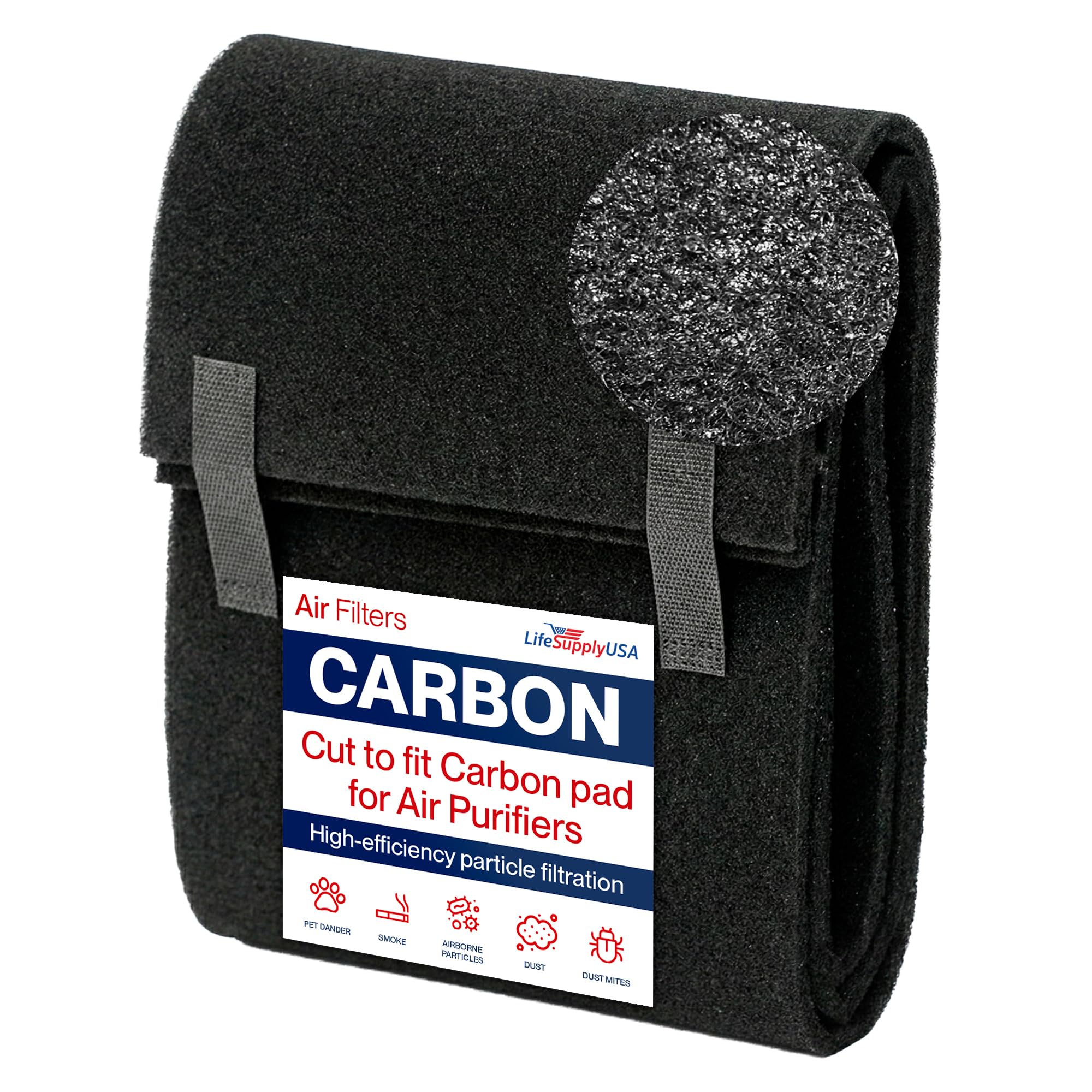
| LifeSupplyUSA cut-to-fit carbon sheet | Replaces a spent flat carbon pad in a recirculating hood; you trim it to size | ~$18 |
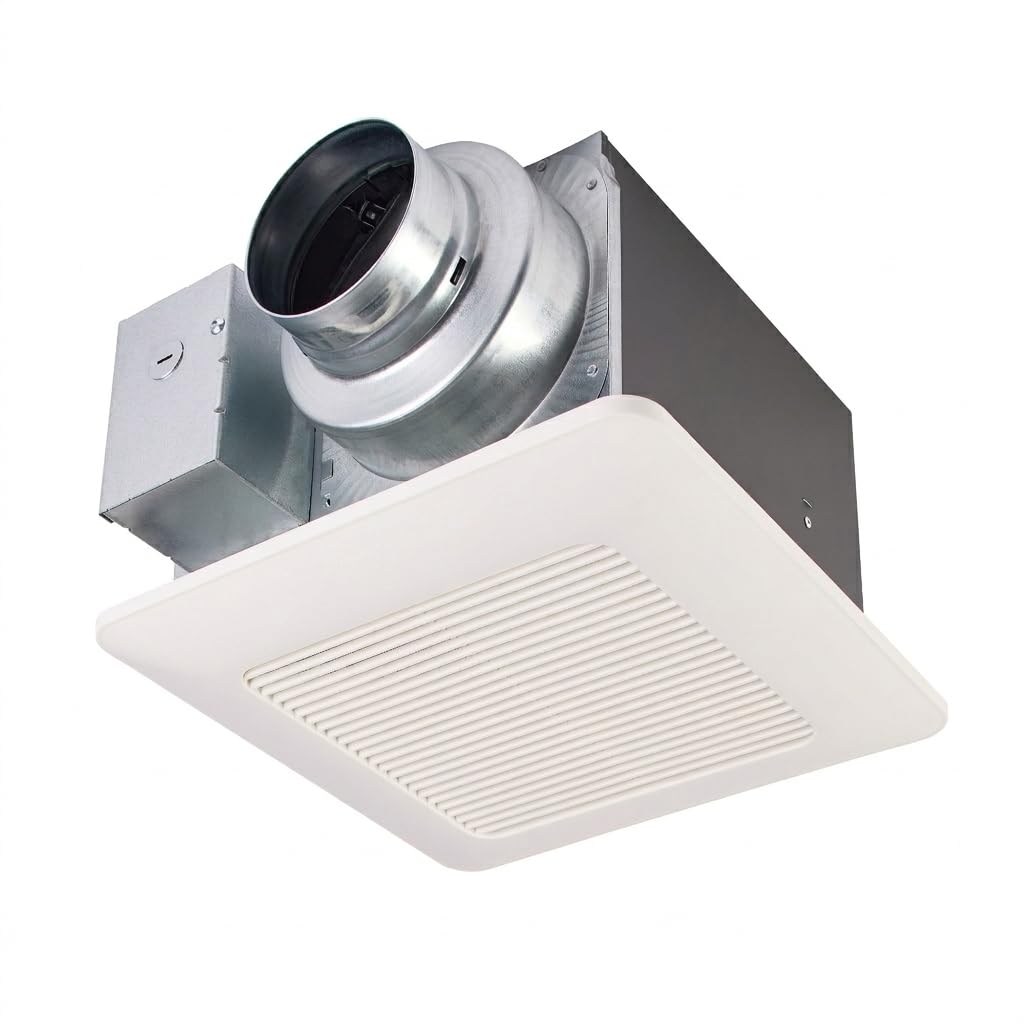
| Panasonic WhisperCeiling FV-0511VQ1 | Quiet ceiling exhaust fan (50/80/110 CFM) for a nearby bathroom or laundry room | ~$168 |
The Panasonic is a bathroom fan, not a range hood, so it doesn't go anywhere near the stove. Where it earns a place here: if the bathroom or laundry room next to your kitchen has a loud old fan nobody switches on, a fan rated under 0.3 sones is one you can leave running to pull stale air out of that part of the house.
Use your doors
This is the cheapest containment method and one of the most effective. Close the kitchen door while you cook. If you have a separate kitchen, that alone can solve the problem.
People with small kids or pets often leave doors open out of habit. Even closing the kitchen door for the 30 minutes you're actually frying or grilling, then opening it once the hood has cleared the air, makes a noticeable difference.
It doesn't help if your kitchen is open-plan. Skip to the air purifier section below if that's you.
Draft stoppers and door seals
Closing the door helps. Sealing the gap under it helps more, because cooking particles are small enough to drift under and around a loose-fitting door.
A draft stopper on the bottom of the kitchen door keeps warm, smelly air from creeping out at floor level. Adhesive foam weatherstripping for the sides and top of the frame costs a few dollars more.
You don't want the kitchen airtight. The point is to slow the passive drift of cooking air into the hallway while the range hood deals with it.
| Product | What it does | Price |
|---|---|---|
| Everlasting Comfort under-door draft stopper | Foam seal that wraps the bottom of the door and slides with it | ~$24 |
The Everlasting Comfort fits doors 30 to 36 inches wide and goes on without drilling or tape. You cut the foam strips, slide them into the cover, and push it under the door. Measure your door width and the gap under it before ordering.
Charcoal bags in hallways and on the landing
If smell does escape the kitchen, charcoal bags at the transition points (hallway, bottom of the stairs, upstairs landing) can soak up some of the odor before it reaches the bedrooms.
They're passive, so they won't keep up during a big cook. For the slow drift that happens over an evening, they help. Put one at the bottom of the stairs and one at the top. Moso says each 200g bag covers spaces up to 90 square feet and recharges if you set it outside in the sun for an hour once a month.
| Product | What it does | Price |
|---|---|---|
| Moso Natural Air Purifying Bag 200g | Unscented bamboo charcoal odor absorber; reusable for up to 2 years per Moso | ~$13 |
The air purifier option
This is where the real money goes, but it's the most effective fix for open-plan homes where you can't shut a door.
An air purifier with an activated carbon filter in the hallway or living room catches cooking particles before they settle into your furniture. The carbon handles the volatile compounds (the smell). The HEPA filter catches the fine oil droplets.
For cooking smells you want real carbon, not just HEPA. Some budget purifiers have thin carbon layers that saturate quickly, and the EPA's air cleaner guide notes that carbon filters work best with a lot of material ("the thicker the better"). Look for a model with a replaceable carbon stage.
The Levoit Core 300S-P is a popular pick for this. It has an AHAM-verified smoke CADR of 141 CFM, auto mode, app control and a 22 dB sleep setting, and it sells for around $150. Using AHAM's 2/3 rule (CADR at least two-thirds of the room's square footage), that CADR suits a room of about 210 square feet, so it's better for a hallway or modest living room than a big great room.
| Product | What it does | Price |
|---|---|---|
| Levoit Core 300S-P air purifier | HEPA + carbon filter, captures cooking particles and odors | ~$150 |
It costs a lot more than a charcoal bag. But if cooking smells in the living room are a daily problem in an open-plan home, this is the fix that does the most.
Open-plan homes: the honest reality
If your kitchen opens straight into the living room with no door and no wall, you won't contain cooking smells completely. You can reduce them.
Combination approach:
- A strong range hood (ducted if possible) running before, during, and 15 minutes after cooking. A 2018 Health Canada and Berkeley Lab study found the extra 15 minutes partly makes up for a weaker fan
- An air purifier with a carbon filter in the living area
- An odor-eliminating spray on fabrics near the kitchen after a heavy cook
- Charcoal bags at transition points (hallway, near the couch)
The living room will still smell while you're frying. But the smell should clear in an hour instead of hanging around until morning, and for most people that's good enough.
If the smell has already settled into upholstery, our main guide covers how to deal with that.
Stop cooking smells going upstairs: frequently asked questions
Why do cooking smells travel upstairs?
The stack effect. Warm air rises, and warm cooking vapor travels up the stairwell with it. It's worse in winter, when the temperature difference between floors is bigger, and worse in open-plan houses with no door between the kitchen and the stairs.
Does closing the kitchen door actually help?
Yes. It's the cheapest containment fix there is. A draft stopper on the bottom of the door helps more, because warm air and odors otherwise slip out through the gap underneath.
Will an air purifier stop cooking smells spreading?
A purifier with both a HEPA filter and an activated carbon filter can cut cooking smells in the room it's in. HEPA catches the fine oil droplets; carbon absorbs the odor compounds. You need both. Put it in the hallway or living room next to the kitchen so it catches particles before they settle on soft furnishings.
What's the best range hood for strong cooking smells?
A ducted hood that vents outside beats a recirculating one every time. For sizing, a common rule of thumb for a wall-mounted hood over an electric range is at least 100 CFM per linear foot of cooktop (about 250 CFM for a 30-inch range); gas ranges need more. Many local codes require makeup air above 400 CFM. Pick a hood quiet enough that you'll actually run it on high.
Sources
- ASHRAE. "Stack effect in buildings." American Society of Heating, Refrigerating and Air-Conditioning Engineers, Fundamentals Handbook, 2024.
- Dobbin NA, Sun L, et al. "The benefit of kitchen exhaust fan use after cooking: An experimental assessment." Building and Environment, 2018.
- EPA. "Volatile Organic Compounds' Impact on Indoor Air Quality." US Environmental Protection Agency.
- EPA. "Guide to Air Cleaners in the Home."
- AHAM Verifide. "AHAM's air filtration standards" (the 2/3 rule for CADR).
- Home Ventilating Institute. "Ventilating living areas" and "How much ventilation do I need?"