If your range hood runs but the kitchen still smells, the usual culprit is a saturated carbon filter in a recirculating (ductless) hood. Carbon can't be washed, so it needs replacing every one to six months depending on how much you fry. If the filter is fine, check the grease filter, hood width, mounting height and fan speed.
The hood is on and making noise, yet the kitchen smells like whatever you cooked two hours ago. It's one of the most common kitchen complaints, and the fix is usually cheap and takes five minutes.
For the full picture on cooking smells beyond the hood, our main guide covers everything.
The most likely cause: a clogged carbon filter
If your range hood is a recirculating (ductless) type, meaning it pulls air in and blows it back into the kitchen instead of venting outside, it has a carbon filter. That filter's job is to absorb cooking odors before the air goes back into the room. A lot of over-the-range microwaves work the same way.
Carbon filters wear out. The activated carbon gradually fills up as it absorbs volatile organic compounds. Once it's full, air still passes through but the odor stays in it. At that point the hood is just a noisy fan.
General guidance is every two to four months for regular cooking. Some manufacturers say every six months, some say quarterly. Check your hood's manual. But if you've had the hood for more than six months and never touched the filter, it's almost certainly done.
How to check if the filter is the problem
Two-minute test:
Turn the hood on its highest setting. Hold a paper towel or tissue near the grille underneath. If suction feels weak, or the paper barely gets pulled toward the grille, the grease filter is probably clogged and blocking airflow.
Start with the grease filter. Pull it out (it usually clips or slides) and check whether it's coated in grease. If it is, soak it in hot water with dish soap or run it through the dishwasher. That alone might fix the airflow.
If the grease filter is clean and the suction is fine but the hood still doesn't clear smells, it's the carbon filter.
How often should you replace the filter?
It depends on how much you cook and what you cook. Frying and high-heat searing saturate carbon faster than boiling or steaming.
Rough guide:
- Cook daily with frying: every 1-2 months
- Cook daily, mostly boiling/baking: every 2-4 months
- Cook a few times a week: every 4-6 months
- Rarely cook: every 6-12 months
You can't clean a carbon filter. Grease filters wash up fine, but once the carbon is spent no amount of washing brings it back.
How to replace a range hood carbon filter
On most recirculating hoods the carbon filter sits behind or next to the grease filter. The process is usually:
- Switch the hood off and unplug it (or turn it off at the breaker)
- Remove the grease filter (clips or slides out)
- Find the carbon filter behind it. It's usually a rectangular or round pad
- Unclip or twist the old filter out
- Fit the new one in the same spot
- Put the grease filter back
Some hoods use brand-specific filters with their own clips or frames. Others take a flat pad you cut to size. If you're not sure which yours needs, find the model number (usually on a sticker behind the grease filter) and search for it on Amazon.
| Product | Fits | Price |
|---|---|---|
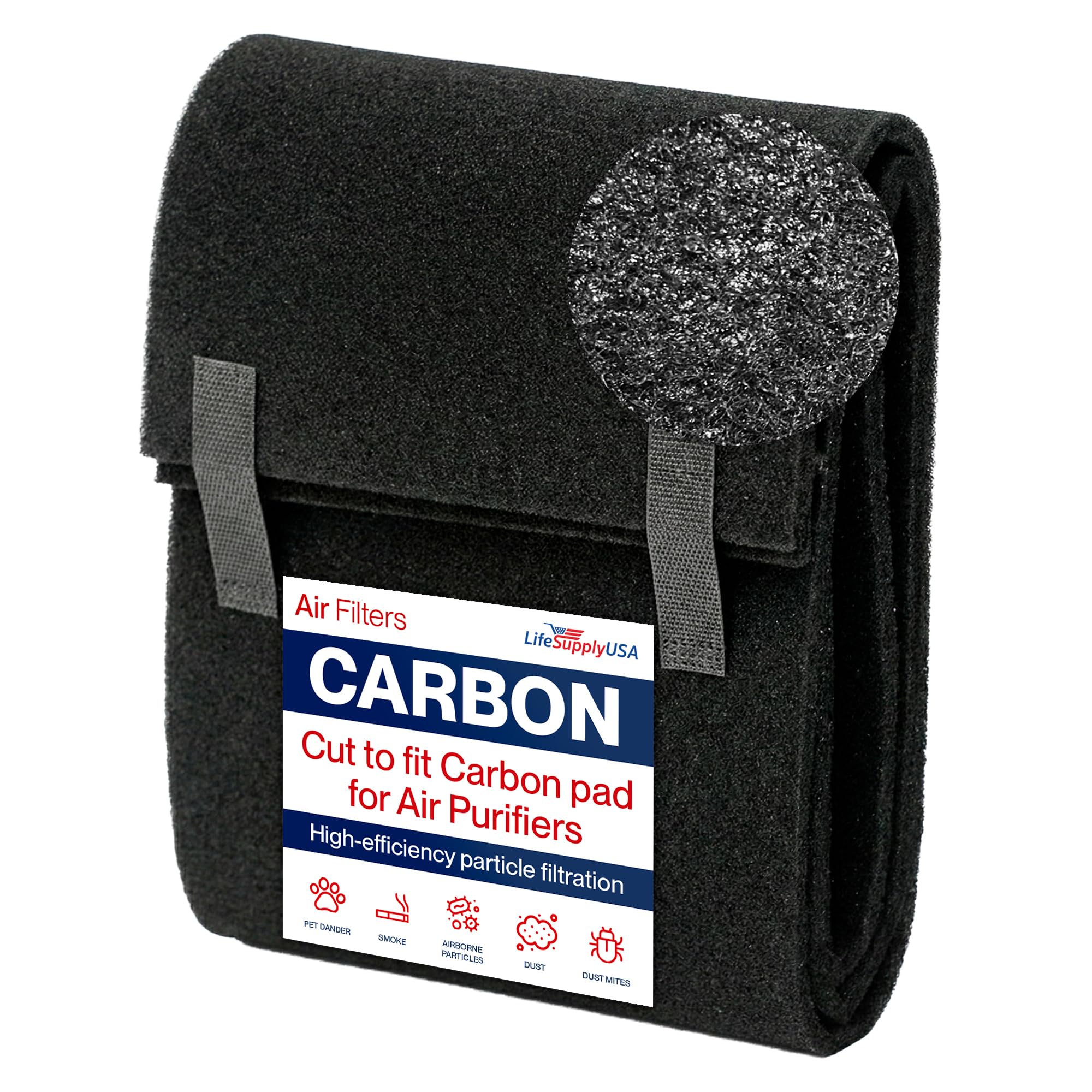
| LifeSupplyUSA cut-to-fit carbon sheet, 16x48" | Hoods that take a flat carbon pad; you cut it to size | ~$18 |
| Your hood brand's own filter (Broan-NuTone, GE, Whirlpool, etc.) | That brand's hoods only | Varies |
The LifeSupplyUSA sheet is a universal (non-OEM) carbon pad, 16 x 48 inches, which you trim to your filter frame. The listing says to swap it about every six months depending on use. It won't help if your hood takes a molded cartridge; those need the brand's own part.
When the filter isn't the problem
If you've replaced the carbon filter and the hood still doesn't clear smells, check these:
Recirculating vs ducted. The Home Ventilating Institute says nonducted, recirculating hoods "provide no real ventilation" because they blow the air back into the kitchen. Make sure you know which type you have. Ducted hoods vent outside and don't use carbon filters. If yours vents outside and smells still linger, the filter isn't the issue. The hood may be too weak for your range, or the kitchen air needs longer to clear.
Hood narrower than the cooktop. The hood should be at least as wide as the cooktop, and ideally a few inches wider. A 30-inch hood over a 36-inch range misses the steam rising from the outer burners.
Mounted too high. Many manufacturers recommend somewhere around 24-30 inches above the cooking surface, sometimes a bit higher for gas. HVI's general guidance is 18 to 30 inches. Go much higher than the manual says and the rising vapor spreads out before it reaches the intake.
Fan speed too low. The lowest setting won't keep up with heavy frying. Use high for searing and frying, and leave the hood running after you finish. In a 2018 Health Canada and Berkeley Lab experiment, running the fan for 15 minutes after cooking partly made up for a low-flow hood.
Ducting problems (ducted hoods). A long duct run, lots of elbows, or kinked flexible duct all cut airflow. Every bend adds resistance, so a powerful hood on a bad duct run can perform like a cheap one. Check that the damper at the exterior wall cap or roof cap opens freely, too.
When to replace the range hood entirely
If your hood is more than 10-15 years old, too weak for your range, or a basic builder-grade model, replacing it may make more sense than buying filters forever. If there's any way to vent a new hood outside, do it. A ducted hood removes the air instead of filtering it.
For sizing, the Home Ventilating Institute's rule of thumb for a wall-mounted hood is at least 100 CFM per linear foot of cooktop, so about 250 CFM for a standard 30-inch range. Gas ranges are often sized by burner output instead (roughly 100 CFM per 10,000 BTU). Note that many local codes require makeup air for hoods above 400 CFM, so a very powerful hood can turn into a bigger project.
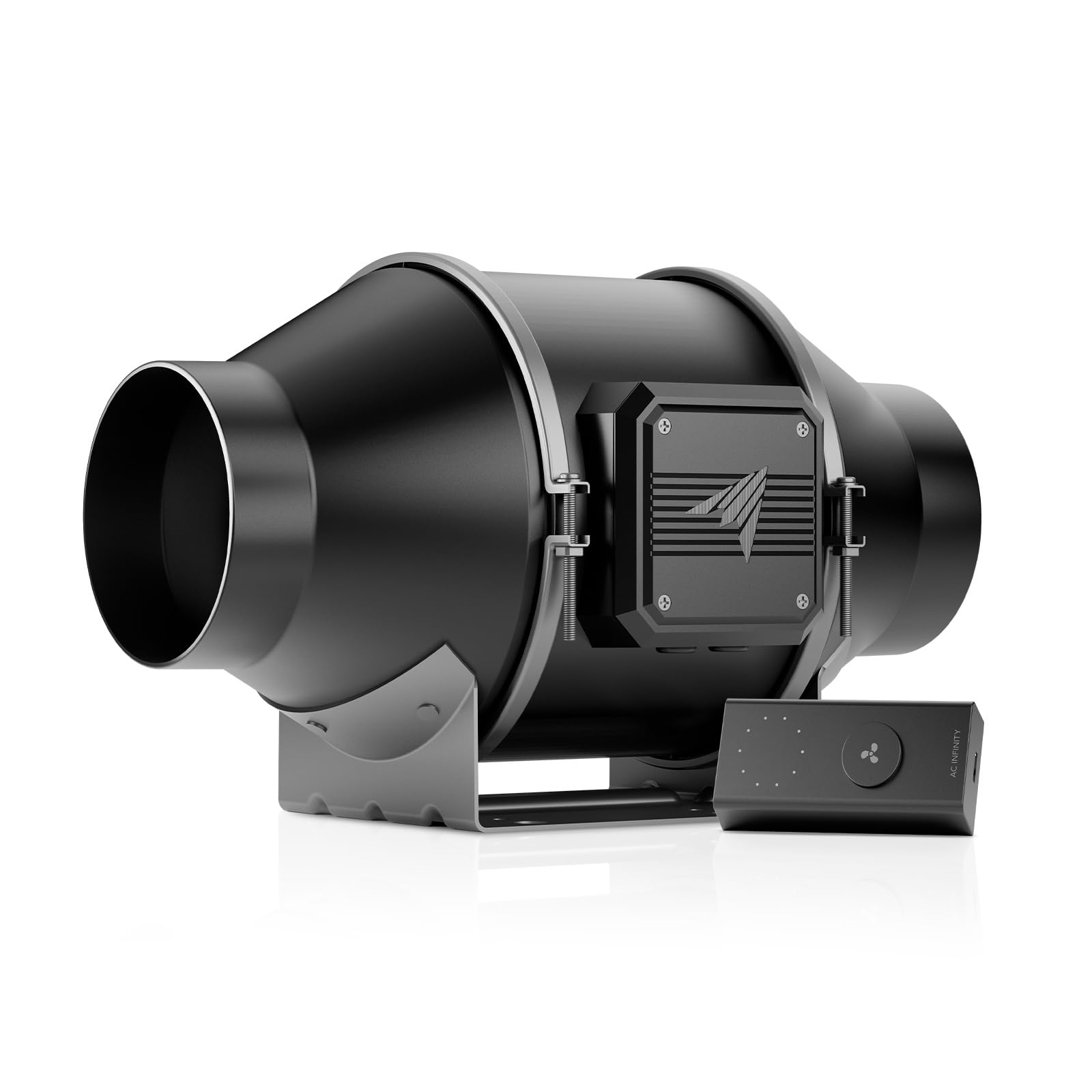
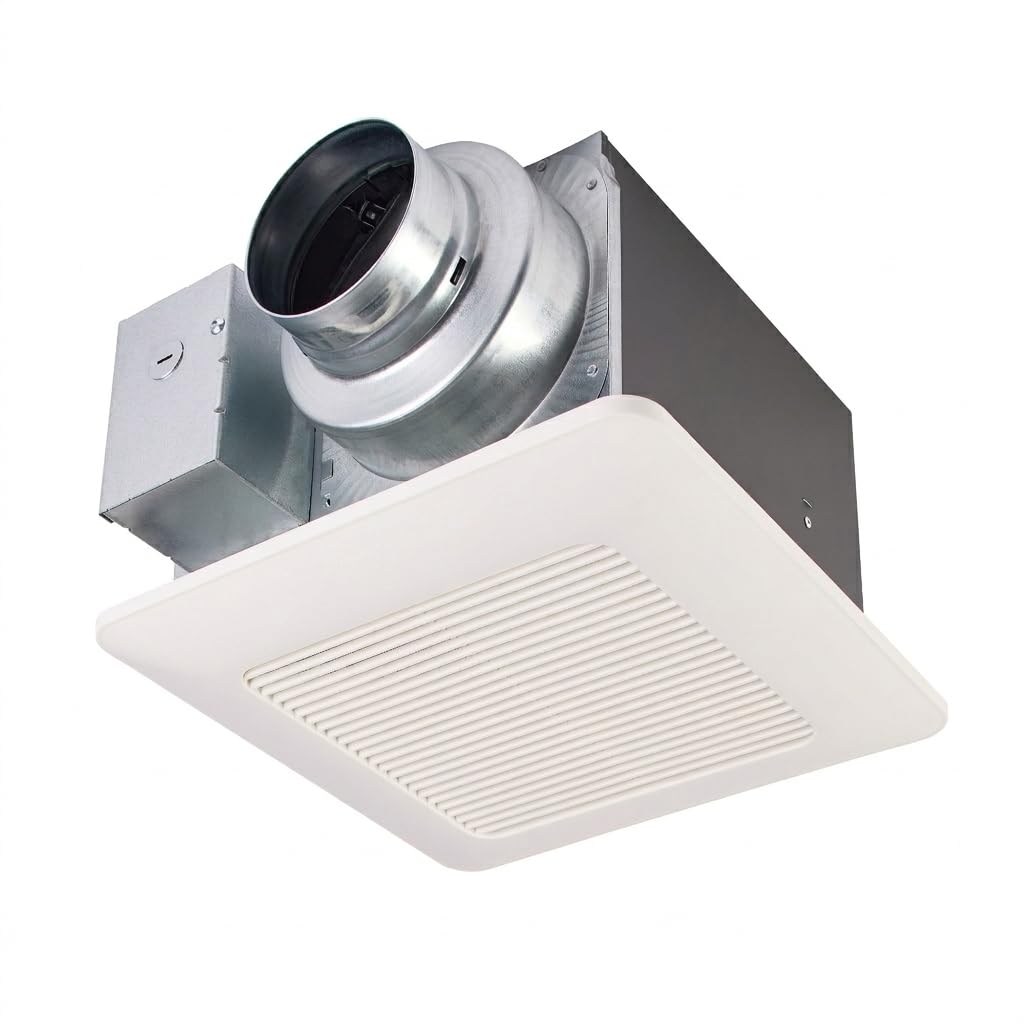
The two fans below are not range hoods. Don't install either one over the stove. They're for the problem around the kitchen:
| Product | What it is | Price |
|---|---|---|
| AC Infinity CLOUDLINE S4 | 4" inline duct fan, 205 CFM, 28 dBA, 10-speed controller | ~$90 |
| Panasonic WhisperCeiling FV-0511VQ1 | Ceiling bathroom exhaust fan, selectable 50/80/110 CFM | ~$168 |
The AC Infinity is sold for exhausting odors from grow tents and small rooms. It's quiet and the controller lets you run it slowly for long periods. It's useful if you're ducting air out of a pantry, laundry room or closed-off space where food smells collect, but it has no grease filter and isn't built for greasy air straight off a pan.
The Panasonic is a bathroom fan with a Pick-A-Flow switch for 50, 80 or 110 CFM, an ECM motor and a sound rating under 0.3 sones. If a nearby bathroom has an old, loud fan (or none), a quiet one that you'll actually leave running helps clear stale air from that part of the house. It takes a 4-inch or 6-inch duct.
Range hood not removing cooking smells: frequently asked questions
How do I know if my range hood carbon filter needs replacing?
Turn the hood on high and hold a paper towel near the grille. If it barely moves, the grease filter is probably clogged. If the grease filter is clean and the suction is fine but cooking smells still hang around while the hood runs, the carbon filter is almost certainly saturated.
Can you wash a carbon range hood filter?
No. Carbon filters can't be washed or reactivated at home. Once the activated carbon is saturated with odor compounds, the filter has to be replaced. Only the metal mesh grease filters can be washed.
What's the difference between a recirculating and a ducted range hood?
A ducted hood vents air outside through a duct in the wall or roof, so the cooking air actually leaves the house. A recirculating (ductless) hood pulls air through a carbon filter and blows it back into the kitchen. Only recirculating hoods use carbon filters. Ducted hoods use grease filters only.
Is it worth upgrading my range hood?
If your hood is 10-15 years old, too weak for your range, or recirculating when you could vent it outside, yes. A common rule of thumb for a wall-mounted hood over an electric range is at least 100 CFM per linear foot of cooktop width, so about 250 CFM for a 30-inch range. Gas ranges need more. Check the noise rating too (sones), because a loud hood is one you won't run on high.
For other ways to deal with cooking smells beyond the hood, see our full guide.
If the smell is reaching other rooms even with a working range hood, we cover containment strategies here.
Sources
- Dobbin NA, Sun L, et al. "The benefit of kitchen exhaust fan use after cooking: An experimental assessment." Building and Environment, 2018. Free PDF from Lawrence Berkeley National Laboratory.
- Home Ventilating Institute (HVI). "How much ventilation do I need?" (range hood CFM per linear foot) and "Ventilating living areas".
- Manufacturer range hood installation and maintenance manuals, cross-referenced for carbon filter replacement intervals and mounting heights.