To get rid of fish smell in the house, ventilate with a cross-breeze, wipe cooking surfaces with an odor-neutralizing spray and wash nearby fabrics. Fish odor comes from trimethylamine (TMA), which clings to fabric and re-releases for hours or days. A bowl of white vinegar helps briefly, because its acid turns TMA into a salt that can't evaporate.
Window open for an hour and no difference? That's normal. Fish smell doesn't clear like other cooking smells, and there's a chemical reason why.
If you're dealing with general cooking smells rather than fish, our main guide covers all the fixes.
Why fish smell is so hard to shift
Fish gives off a volatile compound called trimethylamine (TMA) when it's cooked, and even as it ages. TMA is a big part of why older fish smells worse than fresh: bacteria convert a compound in the flesh called TMAO into TMA over time, and microbiologists describe that conversion as a major spoilage reaction in stored marine fish. Heat drives more of it into the air.
Two things make TMA so stubborn. It's very volatile, so it gets airborne fast. And it clings to porous things like fabric, cushion covers, curtains, even your hair, then slowly releases back into the air over hours or days. That's why you can open every window, air the place out for an hour, and the bedroom upstairs still smells of salmon.
Most cooking smells are a mix of oil droplets and vapor that clears once you ventilate. TMA is different. Airing the room deals with what's in the air, but not with what's soaked into fabric. You have to handle both.
Fats breaking down in the heat add their own smell too, but TMA is what makes fish smell like fish.
Open windows and create a cross-breeze
Do this first. Open windows on opposite sides of the house if you can. You want air flowing through, not just sitting there. A single open window lets some fresh air in but doesn't push the smell out. Two windows on different walls give you a cross-breeze that actually moves the air.
If your windows are all on one side, put a box fan in one of them facing outward to push air out. It's not elegant, but it works.
Spray cooking surfaces with an odor-neutralizing spray
This is the most effective immediate fix. Cooking leaves a film of fish oil and residue on the stovetop, counters and backsplash, and that film keeps putting smell back into the room. Regular kitchen cleaner takes off the grease, but a dedicated odor spray is made to deal with the smell molecules themselves.
Spray the stovetop, countertops, backsplash and any hard surfaces near where you cooked, give it a minute, and wipe. For fabric (cushion covers, curtains), spray and let it air-dry.
| Product | What it does | Price |
|---|---|---|
| Zero Odor multi-purpose spray | Bonds with odor molecules and converts them, per the maker; no lasting fragrance; safe on fabrics | about $20 (22 oz) |
Not sure whether to go for a spray, charcoal, or a plug-in? We compare all three types here.
Put a bowl of white vinegar on the stove
The old-school fix, and it does work, at least chemically. Vinegar contains acetic acid and TMA is alkaline. The acid reacts with TMA and turns it into a salt that can't evaporate, so it can't reach your nose. Lemon juice works the same way.
The catch is that a bowl of vinegar only catches the TMA that drifts into it, and it evaporates. It's a decent first response while you sort out the rest, but it won't solve a strong fish smell by itself.
Place activated charcoal bags near the kitchen
Activated charcoal traps odor molecules in its pores. Bags like Moso Natural's use bamboo charcoal and work passively: no power, no fragrance, and the only maintenance is setting them in sunlight for an hour once a month to recharge.
They're slow. They work over hours, not minutes, so don't expect them to rescue you from a fresh fish smell. They're for the background odor that hangs around after the immediate fix, and for keeping the rooms next to the kitchen from picking it up. Moso rates each bag for up to 90 square feet.
| Product | What it does | Price |
|---|---|---|
| Moso Natural charcoal bag 200g | Unscented bamboo charcoal, lasts 2 years with monthly sunlight | about $13 |
| Moso Natural charcoal bag 4-pack | Same bags, enough for the kitchen and nearby rooms | about $40 |
Leave out a jar of odor-absorbing gel
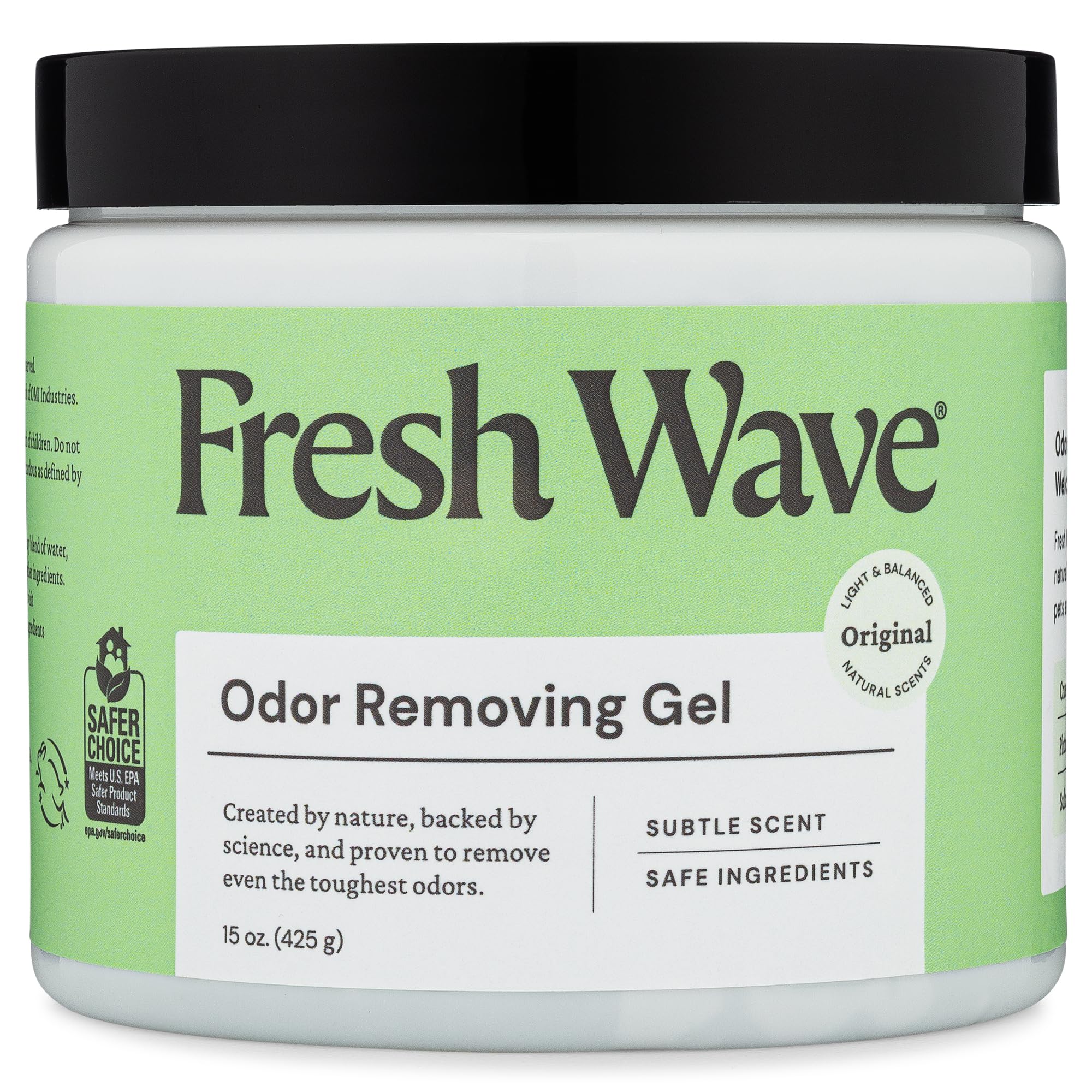
If the fish smell is still hanging around the next day, a gel jar keeps working on it without you thinking about it. Fresh Wave's gel is made with plant oils (lime, pine needle, clove, anise and cedarwood) and the company says it absorbs cooking odors for 30 to 60 days. You open the jar, set it on the counter, and leave it.
It has its own light scent from the oils. It's not a fast fix. Think of it as a stronger, always-on partner to the charcoal bags, especially if you cook fish often.
| Product | What it does | Price |
|---|---|---|
| Fresh Wave Odor Eliminator Gel 15 oz | Plant-based gel, EPA Safer Choice, refillable jar | about $15 |
Use a splatter screen when cooking fish
Prevention rather than cure, but it helps a lot. A mesh splatter screen sits over the pan while the fish cooks. Steam gets out, and a lot of the oil droplets that carry the smell into the rest of the house get caught.
Much of the fish smell that ends up on your couch got there as tiny oil droplets thrown into the air during frying. The BergKoch screen below is 13 inches, stainless steel with a fine mesh, dishwasher safe, and has more than 43,000 Amazon reviews at 4.6 stars. For about $10, it's one of the cheapest wins here.
| Product | What it does | Price |
|---|---|---|
| BergKoch 13" splatter screen | Stainless fine mesh, fits most pans and skillets | about $10 |
Turn your range hood on before you start cooking
Most people switch the hood on once they notice the smell. By then the kitchen is already full of fishy air. Turn it on a few minutes before you start so it's already pulling air when the steam rises from the pan.
Leave it running for at least 15 minutes after you finish. Cooking particles and odors linger after the burner is off (a 2018 Health Canada and Berkeley Lab study measured lower exposure when the fan kept running for 15 minutes), and switching the hood off the moment the fish is done is a common mistake. If your hood vents outside, this alone makes a big difference.
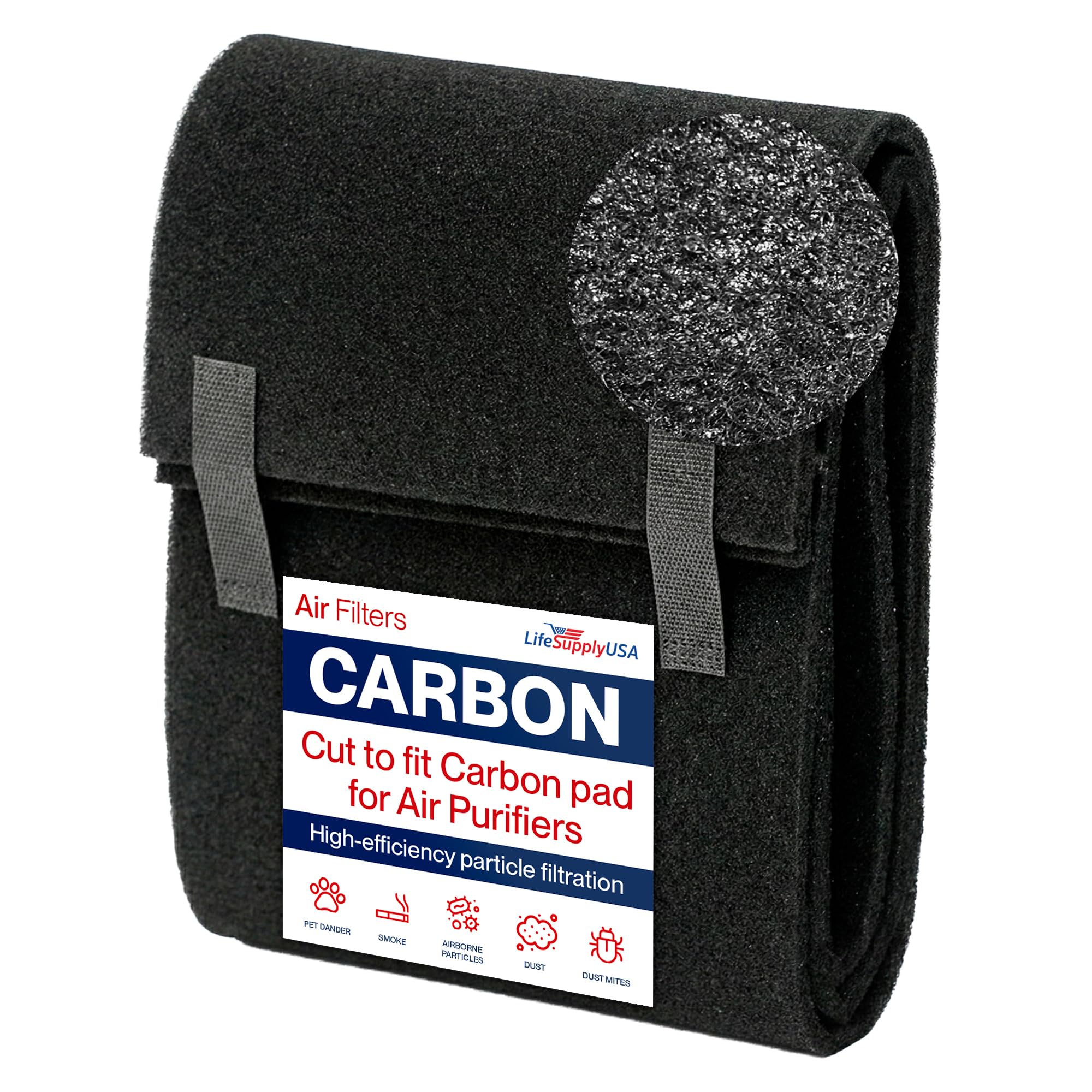
If your hood doesn't seem to help much and it's a recirculating model (no duct to the outside), the carbon filter is probably spent. Check your manual for the interval; every few months with regular cooking is typical. Plenty of people have never changed theirs.
If your range hood isn't doing its job, our troubleshooting guide covers the likely causes.
| Product | What it does | Price |
|---|---|---|
| Cut-to-fit carbon filter sheet 16x48" | Cut into pads for hoods that take a flat carbon filter | about $18 |
Wash soft furnishings near the kitchen
If the smell has been around for a day or more, it's in the fabric. Cushion covers, dish towels, the curtains nearest the kitchen, couch throws. TMA clings to fibers and re-releases slowly, which is why the smell seems to come back after you've aired the place out.
Throw anything removable in the wash. For curtains and upholstery you can't easily wash, spray them with an odor-neutralizing spray and leave the windows open.
What doesn't work
Air fresheners and scented candles add a competing fragrance but don't touch the TMA stuck in your fabrics. When the fragrance fades, the fish smell comes back. They're fine as a finishing touch after you've dealt with the cause, but not as a fix.
Simmering cinnamon sticks or lemon peel mostly adds a nicer smell on top, and the effect doesn't last. Your house ends up smelling of cinnamon and fish, which is arguably worse.
When the smell won't go
If you've tried everything above and the smell is still there after 48 hours, it might not be the cooking. Check:
- The kitchen drain. Food residue in the P-trap or garbage disposal can smell fishy
- The trash can. Fish packaging on a warm day
- The fridge. Raw fish that leaked onto a shelf
- Old cooking oil. Reused frying oil develops rancid, fishy notes
- The dishwasher filter. Trapped food goes bad over time
For fixes beyond fish, see our complete guide to getting rid of cooking smells.
How to get rid of fish smell: frequently asked questions
Why does fish smell linger longer than other cooking smells?
Fish releases trimethylamine (TMA), a volatile, alkaline compound that clings to fabric and porous surfaces. Most cooking smells are oil vapor that clears with ventilation. TMA that has soaked into fabrics keeps re-releasing the smell for hours or days. That's why opening windows often isn't enough.
Does white vinegar actually get rid of fish smell?
Yes, to a point. Vinegar is acidic and TMA is alkaline, so the acid reacts with TMA and turns it into a salt that doesn't evaporate and doesn't smell. The catch is that vinegar evaporates quickly, so it's a short-term fix. Lemon juice works the same way. Use it as a first response while you deal with the surfaces and fabrics.
Will an air freshener or scented candle mask fish smell effectively?
No. Air fresheners and candles add a competing fragrance but don't touch the TMA stuck in your curtains, cushions and clothes. When the fragrance fades, the fish smell comes back. For real removal, treat the surfaces and fabrics with an odor-neutralizing spray and wash what you can.
How can I prevent fish smell from spreading in the first place?
Turn the range hood on before you start cooking, not after. Use a splatter screen on the pan to catch the oil droplets that carry much of the smell. Close doors to other rooms. If you have a recirculating hood, check its carbon filter, since an old one does very little.
Sources
- American Chemical Society. "Trimethylamine." Molecule of the Week, ACS.org.
- Barrett EL, Kwan HS. "Bacterial reduction of trimethylamine oxide." Annual Review of Microbiology, 1985.
- National Library of Medicine. PubChem: Trimethylamine.
- Dobbin NA, Sun L, Wallace L, et al. "The benefit of kitchen exhaust fan use after cooking: an experimental assessment." Building and Environment, 2018.
- US EPA. Safer Choice program.
- Zero Odor. Amazon product listing for Zero Odor Multi-Purpose Odor Eliminator 22 oz. 2026.
- Fresh Wave. Amazon product listing for Fresh Wave Odor Eliminator Gel 15 oz. 2026.
- BergKoch. Amazon product listing for the 13" stainless steel splatter screen. 2026.