Weighted blankets help some people feel calmer and sleep better, but the evidence is modest. One 2020 trial found large insomnia improvements in psychiatric patients, while reviews call the research thin. For most adults on a queen bed, the YnM 15 lb weighted blanket (about $45) is the pick. The Topcee 20 lb (about $40) is the budget option.
Weighted blankets went from occupational therapy tool to mainstream bedroom product in a few years. The marketing promises a lot: less anxiety, faster sleep, deeper sleep, fewer wake-ups. The research backs a smaller version of that. Below are the four weighted blankets worth buying, how to pick the right weight, and what the studies actually found.
If you weigh more than about 165 lb, the YnM 20 lb costs only a few dollars more than the 15 lb. Hot sleepers should look at the YnM cooling blanket.
These picks are based on the manufacturers' specs, the research on weighted blankets and tens of thousands of buyer reviews, not hands-on testing. This is general information, not medical advice.
Our picks
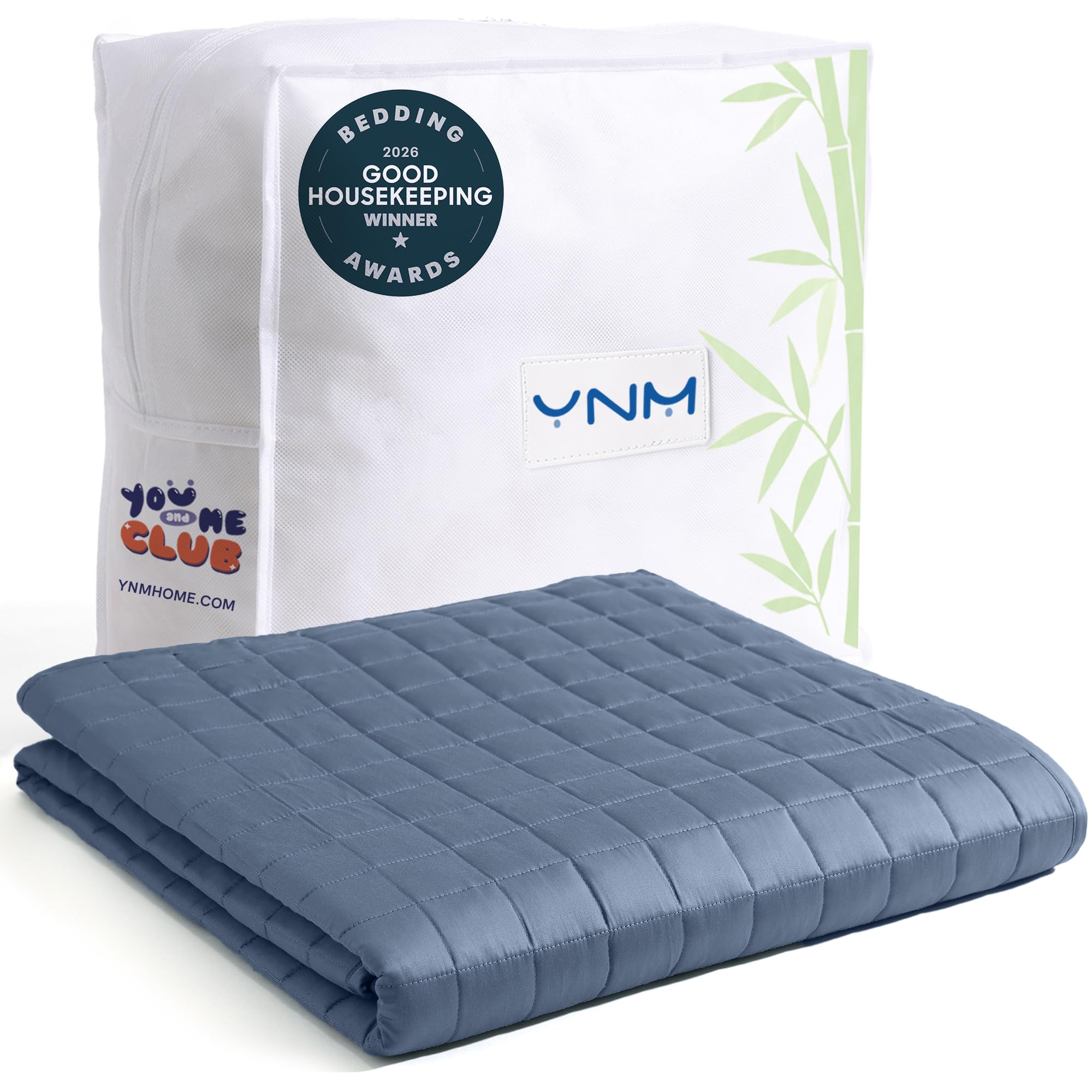
YnM Weighted Blanket 15 lb: best overall
ASIN: B075F9ST7G
This is the one most people should start with. It's 60x80 inches (made for one adult on a queen bed), weighs 15 lb, and was around $45 when we checked. It has a 4.6-star average from nearly 24,000 ratings, which is about as much buyer feedback as you'll find for any weighted blanket.
The construction is why it rates well. The weight comes from glass beads sewn into 2x2 inch pockets, which are small enough that the beads don't slide down to your feet overnight. YnM says it uses more glass beads and less fiberfill than its older design, which should make it sleep a bit cooler. There are 16 loops around the edge for tying on a cover (sold separately), so the blanket doesn't shift around inside it.
A 15 lb blanket suits adults who weigh roughly 130 to 165 lb. It's machine washable on a gentle cycle and can be tumble dried on low or line dried.
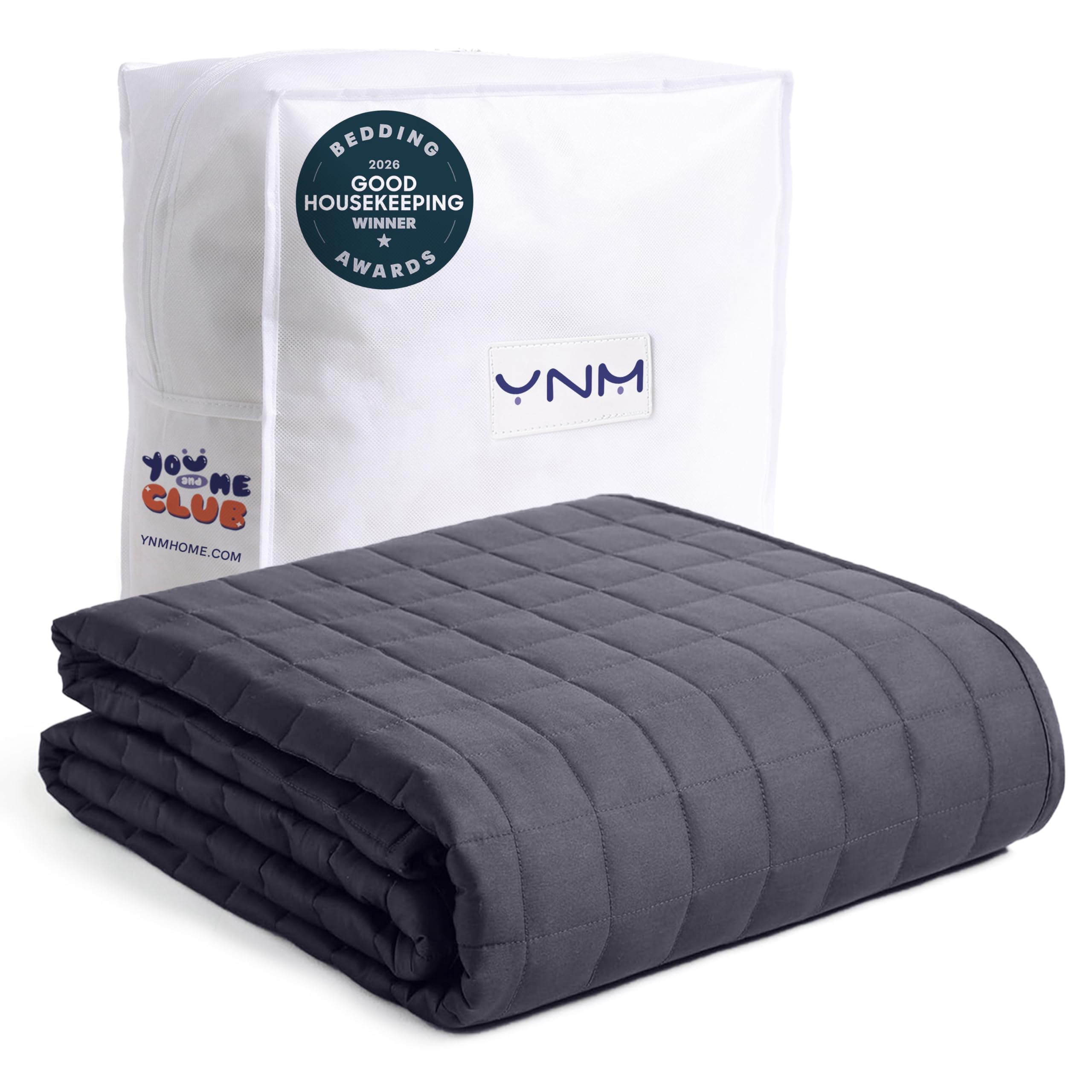
YnM Weighted Blanket 20 lb: best heavy
ASIN: B0CRB2Y4H5
Same blanket, same 60x80 inch size, 5 lb heavier. It was about $48 when we checked, so the price gap is small. It suits adults around 165 to 210 lb, and it's also the one to try if a 15 lb blanket felt like it wasn't doing much. The listing shares its 4.6-star review pool with the 15 lb version.
YnM Cooling Weighted Blanket 15 lb: best for hot sleepers
ASIN: B09S2ZGMKZ
Overheating is the main reason people give up on weighted blankets. Extra mass holds extra heat, and a lot of them end up in the closet by July. This version has a rayon side that YnM describes as silky and cool to the touch. That fabric won't cool you down like a fan, but it feels less stuffy against the skin than plain microfiber.
Note the size: it's 48x72 inches, meant for one person on a twin or full bed, and YnM sizes the 15 lb version for someone around 140 lb. It also costs more, about $75 when we checked, with a 4.5-star average from around 8,500 ratings. You get the same 2x2 inch pockets and 16 cover loops as the standard YnM. If you sleep hot and the size works for you, it's worth paying for.
Topcee Weighted Blanket 20 lb: best budget
ASIN: B09MDFV73Q
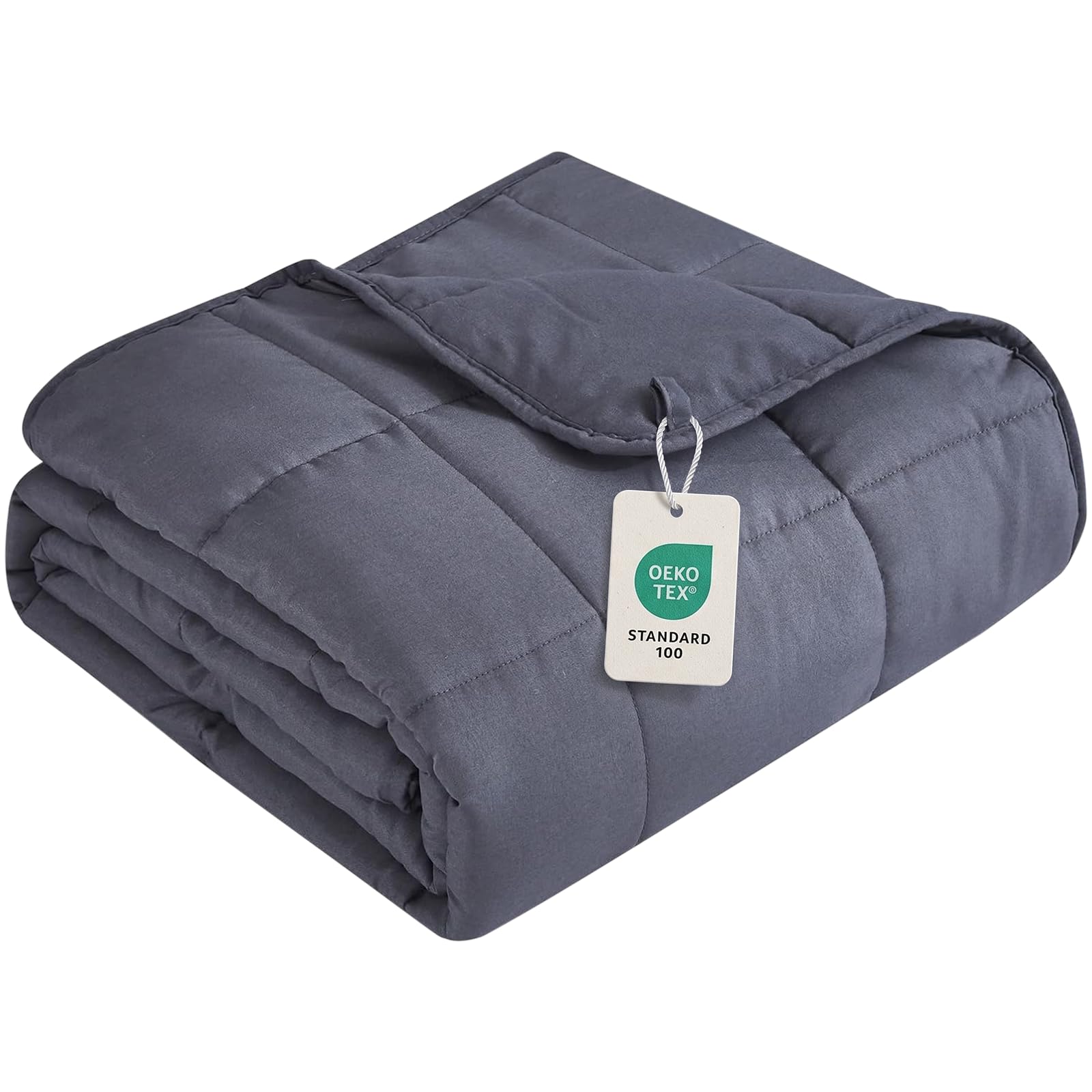
At about $40 for a 20 lb, 60x80 inch blanket, the Topcee is the cheapest pick here. It uses glass beads inside a microfiber shell and has a 4.5-star average from around 10,000 ratings. The listing doesn't mention cover loops, and Topcee says hand washing and hanging to dry are the best ways to clean it, which is a real chore with 20 lb of blanket. If you can live with that, it does the same basic job for less.
How heavy should a weighted blanket be?
The common guide is about 10% of your body weight. YnM's sizing guide adds 1 pound to that. Here's a rough chart:
| Your weight | Blanket weight |
|---|---|
| 100 to 130 lb | 10 to 12 lb |
| 130 to 165 lb | 15 lb |
| 165 to 210 lb | 20 lb |
| Over 210 lb | 25 lb |
If you're between sizes, go lighter. A blanket that's too heavy is harder to move under and harder to get off, and that's the opposite of relaxing.
Size matters too. Weighted blankets are smaller than regular blankets on purpose, because the weight is supposed to sit on you rather than drape over the sides of the mattress. A 60x80 inch blanket fits one adult on a queen bed. A 48x72 inch blanket suits a twin or full. If two people want to share, YnM's guide points to 80x87 or 88x104 inch blankets, though plenty of couples find two separate blankets more comfortable since they rarely weigh the same.
What the research shows
The most cited study is a 2020 randomized controlled trial in the Journal of Clinical Sleep Medicine. It gave weighted chain blankets to adults with insomnia and a psychiatric diagnosis (depression, bipolar disorder, generalized anxiety disorder or ADHD). After four weeks, people using the weighted blanket were far more likely to see their insomnia severity score drop by half or more than people using a light control blanket. That's a striking result, but it was one trial of about 120 people with specific conditions.
A 2020 systematic review in the American Journal of Occupational Therapy (Eron et al.) found some evidence that weighted blankets can reduce anxiety, but not enough evidence to say they treat insomnia. Later reviewers have pointed out the same problems: many studies are small, and you can't really blind people to whether they're under a heavy blanket, so a placebo effect is hard to rule out.
A fair reading is that weighted blankets help some people, mostly those whose sleep trouble comes from restlessness or a mind that won't settle. They aren't a cure for insomnia. If your sleep is being wrecked by pain, sleep apnea or a body clock that's out of sync, a blanket won't fix the cause.
How they work
The idea is called deep pressure stimulation. Spreading weight evenly over your body gives a steady, firm pressure, a bit like a long hug. Researchers think this may nudge the nervous system toward its "rest" mode, which would explain why people describe feeling calmer. The mechanism hasn't been pinned down well, though, so treat the physiology claims you see in ads with some skepticism.
The weight needs to be enough to notice but not so much that it feels like it's pinning you down or making it harder to breathe. That's why the 10% guide exists.
Weighted blankets and anxiety
A weighted blanket can be a nice part of winding down. It isn't treatment for an anxiety disorder. If anxiety is getting in the way of your sleep, work or relationships, talk to your doctor or a therapist. Cognitive behavioral therapy for insomnia (CBT-I) has much stronger evidence behind it than any product on this page.
If you're in crisis or thinking about harming yourself, call or text 988 to reach the Suicide & Crisis Lifeline, any time.
Who should not use a weighted blanket
Babies and toddlers should never sleep under a weighted blanket because of the suffocation risk. For older children, ask your pediatrician first, and make sure the child can easily push the blanket off on their own.
Adults should check with a doctor before using one if they have a breathing problem (such as sleep apnea, asthma or COPD), a circulation problem, or limited mobility. The same goes for anyone who might struggle to lift the blanket off themselves.
Some people with claustrophobia find the pressure uncomfortable rather than soothing. If you're unsure, start lighter than the 10% guide.
Weighted blanket vs other anxiety and sleep aids
A weighted blanket works on the physical side, through pressure. Other approaches work on your thoughts or your body chemistry:
Magnesium supplements may help if you're low in magnesium, though the sleep evidence is limited. You can use them alongside a weighted blanket.
Breathing techniques and cognitive strategies go after racing thoughts directly. A blanket might make them easier to do if it takes the edge off.
White noise machines deal with noise, which is a separate problem. A blanket does nothing for a barking dog.
For anxiety-driven insomnia, a combination usually works better than any one thing: a consistent bedtime routine, one or two techniques for quieting your thoughts, and a weighted blanket if you like the feel of it.
Frequently asked questions
Can you use a weighted blanket with a comforter? Yes. Most people put it on top of or under their regular comforter. In summer, plenty of people use the weighted blanket on its own.
How long does it take to get used to a weighted blanket? Most people adjust within a few nights. It feels odd at first, especially if you move around a lot. Give it a week before you decide.
Can you wash a weighted blanket? The YnM blankets can go in the washer on a gentle cycle, then tumble dry on low or line dry. Topcee recommends hand washing. Wet blankets are much heavier than dry ones, so check your washer's capacity first. A removable cover you can wash on its own saves a lot of hassle.
Are weighted blankets hot? They're warmer than a regular throw because there's more material on you. Glass bead blankets with less fiberfill run cooler than older designs, and a cooling cover or the rayon-sided YnM helps if you run hot.
Is a weighted blanket better than sleeping pills? They do different jobs. A weighted blanket is low risk for most healthy adults and worth trying first if anxiety keeps you up. Sleeping pills can help in the short term but come with side effects and aren't meant for long-term use. If you're struggling with sleep for more than a few weeks, see your doctor.
Related reading:
- Can't Switch Off at Night? 9 Ways to Calm a Busy Mind
- Best Magnesium for Sleep 2026
- The Best Bedtime Routine for Adults Who Can't Sleep
- Journaling Before Bed
Sources
- Ekholm B, Spulber S, Adler M. "A randomized controlled study of weighted chain blankets for insomnia in psychiatric disorders." Journal of Clinical Sleep Medicine, 2020.
- Eron K, et al. "Weighted Blanket Use: A Systematic Review." American Journal of Occupational Therapy, 2020.
- Qaseem A, et al. "Management of Chronic Insomnia Disorder in Adults: A Clinical Practice Guideline From the American College of Physicians." Annals of Internal Medicine, 2016.
- 988 Suicide & Crisis Lifeline.