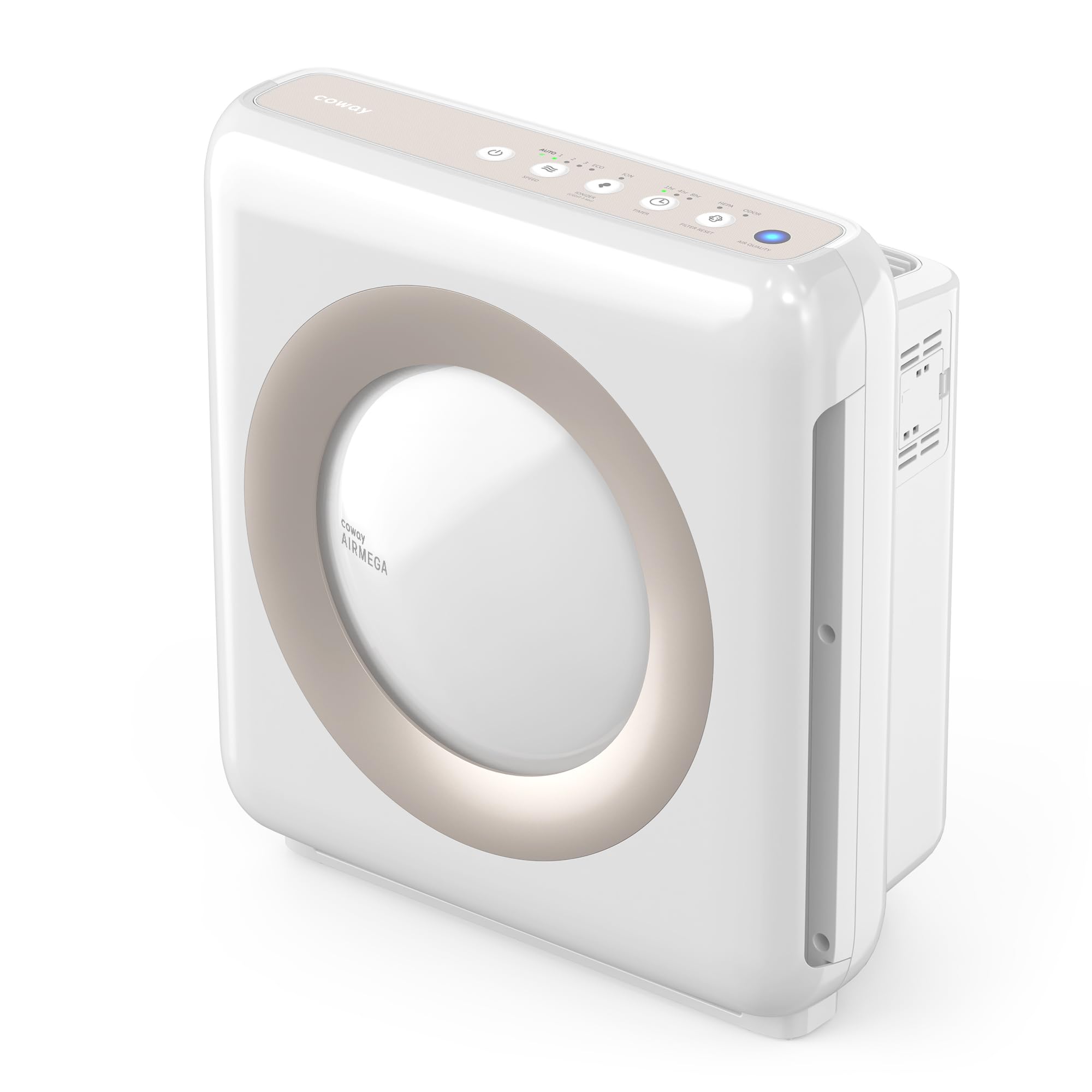
For asthma, the best pick here is the Coway Airmega AP-1512HH "Mighty": True HEPA for particle triggers, carbon for fumes, a switch-off ionizer, and about 6 air changes an hour in a 300 sq ft room. The Winix 5510 is the value pick at about $135, with a slightly higher CADR and the same switchable ionizer.
This is general information about buying a purifier, not medical advice. If you have asthma, your doctor or allergist is the right person to talk to about managing it. The Asthma and Allergy Foundation of America keeps a list of common asthma triggers, and the EPA has a similar guide to indoor asthma triggers.
If your asthma is triggered or made worse by indoor air, a good air purifier running in the rooms you use most can reduce how much of those airborne triggers you breathe in. It won't replace your treatment plan, and results vary from person to person.
What Triggers Matter Most
Asthma triggers vary between individuals. Common indoor ones include:
Dust mite allergen. Microscopic debris from house dust mites, one of the most common indoor allergy and asthma triggers. The particles are relatively heavy and mostly get airborne when bedding or furniture is disturbed.
Pollen. Tree, grass and weed pollen comes in through open windows and doors and on clothes and hair. Timing depends on where you live, but broadly it's trees in spring, grasses in late spring and summer, and ragweed from late summer into fall.
Pet dander. Tiny skin flakes from cats, dogs and other animals. Cat allergen is small and sticky, and it can hang around in a home for months after the animal has gone.
Mold spores. More common in damp homes, basements and poorly ventilated bathrooms. Mold can trigger both allergic and non-allergic asthma.
VOCs and chemical irritants. Not allergens, but they can irritate inflamed airways. Sources include cleaning products, air fresheners, paint, new furniture, gas cooking and cigarette smoke. These are gases, not particles, so a HEPA filter does nothing for them. You need activated carbon.
Particle pollution (PM2.5). Fine particles from vehicle exhaust, wood burning and wildfire smoke can get indoors even with the windows closed. Living near a busy road or in a wildfire-prone region makes this more of a concern.
What to Look for in an Asthma Air Purifier
True HEPA at minimum. True HEPA means 99.97% of particles at 0.3 micron, the hardest size to catch, and that covers most particle triggers. Avoid "HEPA-type" or "HEPA-like" claims, which aren't held to any standard.
Activated carbon as well as HEPA. Cleaning chemicals, cooking fumes and off-gassing from new furniture are gases, so they go straight through a HEPA filter. Some people with asthma find fumes as much of a problem as particles, and carbon is the stage that handles them.
No ionizer, or one you can switch off. Ionizers can produce small amounts of ozone, and the EPA warns that inhaled ozone can damage the lungs and aggravate asthma. Reputable brands keep emissions low, and CARB certification is a useful check here because every portable air cleaner sold in California has to be certified against an ozone limit. Some people with asthma are still sensitive. If you're unsure, pick a purifier where the ionizer can be disabled, or skip ionizers entirely.
Enough air changes for your room. A common target for asthma and allergy use is 4 to 5 air changes per hour (ACH) in your main rooms. The math: CADR (CFM) × 60 ÷ (floor area × ceiling height) = ACH. A purifier with a 250 CFM CADR in a 300 sq ft room with 8 ft ceilings gives 250 × 60 ÷ 2,400 = about 6 ACH.
Continuous operation. A purifier only helps while it's running, so leave it on in the rooms you use most: usually the bedroom overnight and the main living area during the day. An hour before bed does less than the whole night.
Recommended Purifiers for Asthma Sufferers
1. Coway Airmega AP-1512HH "Mighty" — Best Overall for Asthma
The Mighty ticks the boxes from the checklist above. It has a True HEPA filter (99.97% at 0.3 micron), a carbon deodorization filter for odors and fumes, and a washable pre-filter that catches hair and larger dust. It also has an ionizer (Coway calls it a "Bipolar Device"), and you can switch it off. If you have asthma, I'd start with it off.
AHAM rates it for 361 sq ft (you can check any model in the AHAM Verifide directory), with a CADR of 233 for smoke, 246 for dust and 240 for pollen. By the formula above, that's roughly 6 air changes an hour in a 300 sq ft room. An air quality sensor with a color LED runs the auto mode, and you also get an eco mode, a timer and a filter indicator. No app.
It's been a US bestseller for years, with 4.6 stars from about 29,000 reviews, and it carries a 3-year warranty.
Specs
- CADR: smoke 233, dust 246, pollen 240 CFM
- AHAM room size: 361 sq ft
- Filter: washable pre-filter + carbon + ionizer (switchable) + True HEPA
- Warranty: 3 years
- Approx. price: about $230 (often less on sale)
2. Winix 5510 — Best Value for Asthma
The Winix 5510 (successor to the 5500-2) has the highest CADR of the compact picks here: 253 smoke, 252 dust and 247 pollen, AHAM Verifide for 392 sq ft. It pairs a True HEPA filter (Winix rates it at 99.99% down to 0.01 micron) with a carbon odor filter for VOC triggers and a washable pre-filter.
PlasmaWave is Winix's ionizing stage. You can turn it off, and for the same reasons as above, people with asthma may want to. The unit still runs as a normal HEPA plus carbon purifier without it.
At about $135 it costs less than the Coway, and it adds a smart sensor with auto mode, light-sensing sleep mode (23.5 dB on lowest speed) and the Winix Smart app.
Specs
- CADR: smoke 253, dust 252, pollen 247 CFM
- AHAM room size: 392 sq ft
- Filter: pre-filter + carbon + True HEPA + PlasmaWave (switchable)
- Approx. price: about $135
3. Blueair Blue Pure 211i Max — Best for Large Rooms
If the room you spend most time in is a large living room or an open-plan kitchen and living area, the smaller units above will struggle to reach 4 to 5 air changes an hour. The 211i Max has a CADR of about 410 CFM (Blueair's figure) and cleans a 674 sq ft room in 12.5 minutes.
HEPASilent combines mechanical and electrostatic filtration and removes 99.97% of particles, pulling air in from all sides through a washable fabric pre-filter. An air quality sensor drives the auto mode, and there's a Blueair app. It runs at 23 dB on low and 53 dB on high.
It costs about $280, so it only makes sense if you need the capacity. For a standard bedroom, one of the first two picks is enough.
Specs
- CADR: about 410 CFM (Blueair)
- Coverage: 674 sq ft in 12.5 min, up to 3,235 sq ft in 1 hour
- Noise: 23 dB (low) to 53 dB (high)
- Filter: HEPASilent + washable fabric pre-filter
- Approx. price: about $280
Things That Won't Help
Ionizers on their own. Some products are mostly ionizer with little mechanical filtration. Ionizers that knock particles onto walls and furniture don't remove them. They just move them somewhere else. You want particles trapped in a filter that leaves the house when you replace it.
Air fresheners and fragrance sprays. Not an air purifier issue, strictly. But aerosol air fresheners and plug-in scent devices release VOCs that can irritate airways, so using them in the same room as a purifier undoes some of its work.
See our HEPA filter guide for more on filter grades, our allergy air purifier guide for related context, and the main air purifier roundup for all options.
Sources
- Asthma and Allergy Foundation of America: Asthma triggers and causes
- US EPA: Asthma triggers: gain control
- US EPA: What is a HEPA filter?
- US EPA: Ozone generators that are sold as air cleaners
- California Air Resources Board: Air cleaners and ozone products
- AHAM Verifide: Directory of certified air cleaners