The best hair dryer for fine hair is the Dyson Supersonic Nural, because its Scalp protect mode adjusts the air to hold a target of about 130°F at the scalp, so fine strands don't cook. The budget pick is the $23 Remington Damage Protection, which has ionic tech and three heat settings and works well kept on low or medium.
Fine hair and high-powered hair dryers don't get along. The top heat setting on a lot of dryers sends out air well past 170°F at close range. Thick hair can handle it. Fine hair can't.
Most hair dryer guides focus on power: more watts, faster drying, bigger motor. That's the wrong way to shop if your hair is fine or thin. You need control. Lower heat, directed airflow, and a way to dry without cooking your strands.
We've picked three dryers at different price points that work well with fine hair. Each gives you some kind of temperature control, whether through sensors, variable settings, or sensible heat levels on the lower modes.
Quick summary: The Dyson Supersonic Nural costs about $450 list. The ghd Air offers variable temperature at around $203. The Remington Damage Protection shows you don't need to spend much; just keep it off the top heat setting.
Why fine hair needs a different approach
Fine hair isn't the same as thin hair, though they often go together. Fine refers to the diameter of each individual strand. Thin refers to how many strands you have. You can have fine hair that's dense, or thick hair that's sparse. Both fine and thin hair share the same problem, though: they heat up fast and damage easily.
Here's why that matters for choosing a dryer.
Thinner cuticle layer. Each strand of fine hair has fewer layers of cuticle (the protective outer shell) than coarse hair. Heat penetrates faster and does more damage per second of exposure. What a thick-haired person barely notices, fine hair feels immediately.
Less moisture retention. Fine hair holds less water by volume, which sounds like a good thing because it dries faster. But it also means there's less of a buffer between "damp" and "overdried." The window where your hair is properly dry but not damaged is narrower.
More prone to breakage. A single fine strand is weaker than a coarse one. Add heat damage and you get split ends, snapping and thinning that's hard to reverse.
So what does this mean in practice?
Use lower heat. The American Academy of Dermatology advises using the lowest heat setting you can. Medium is plenty, even on a full 1875W dryer (the practical maximum for US models). If your dryer has variable temperature, keep it below about 140°F. The Dyson Nural can manage this for you in Scalp protect mode.
Ionic technology helps. It breaks water into smaller droplets, so your hair dries faster at the same temperature. Less time under heat means less damage. The Remington and the ghd Air both list ionic conditioning.
Always finish with cool shot. The cool shot button isn't decorative. A blast of cold air at the end seals the cuticle flat, locking in moisture and adding shine. On fine hair you can see the difference.
Don't use max heat. The highest setting on a powerful dryer is designed for thick, coarse hair. Fine hair doesn't need it.
Quick Comparison
| Product | Type | Price | Deal | Rating | Best For |
|---|---|---|---|---|---|
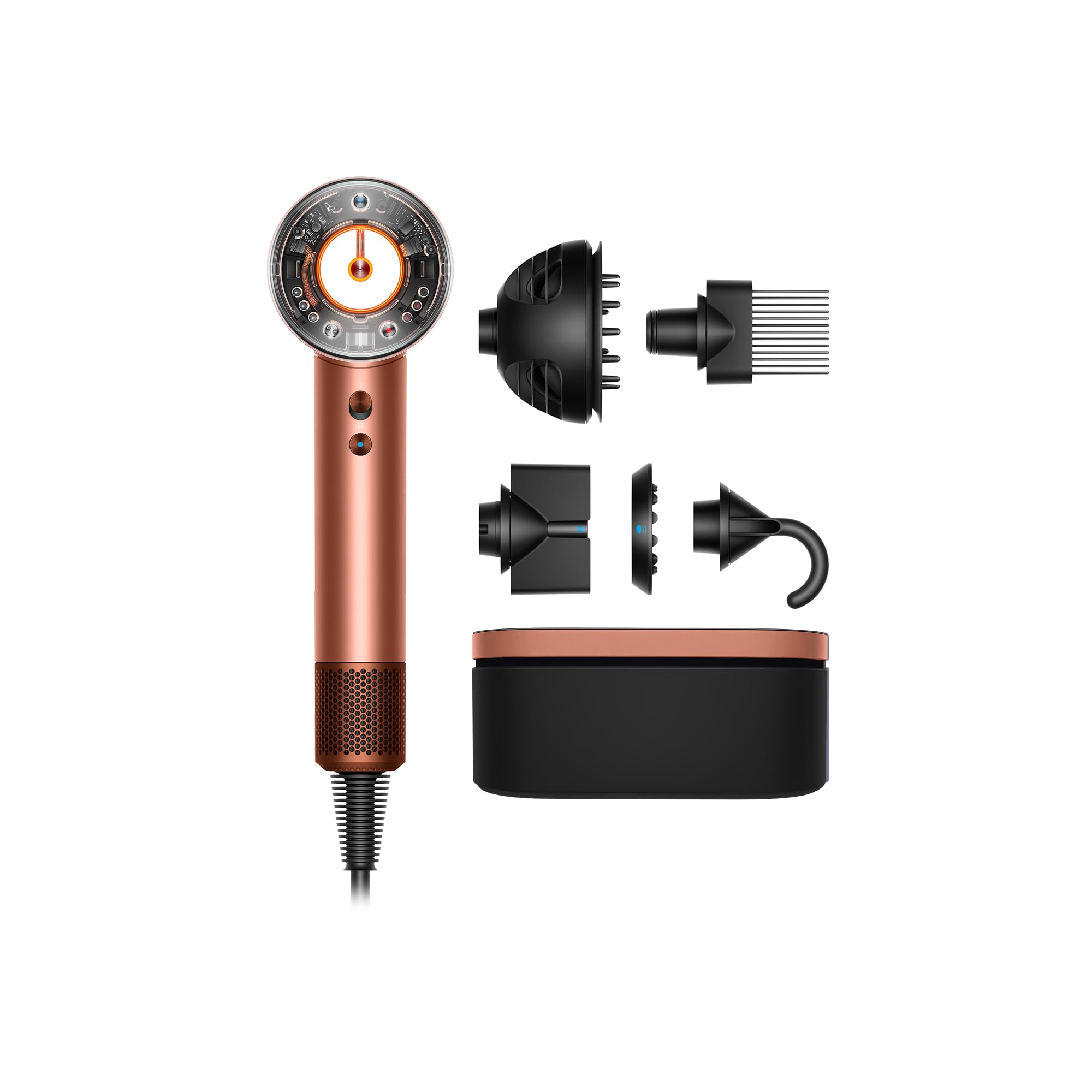 Dyson Supersonic Nural™ Hair DryerDyson | Sensor-controlled hair dryer with Scalp protect mode | $449.99 | Fair Price | 9/10 | Sensor-managed heat so fine hair doesn't overheat, if budget allows |
 ghd Air Professional Hair Dryer, Blackghd | Professional ionic hair dryer | $239.00 | Above Avg | 7/10 | Variable temperature and power control with a professional-strength motor |
 Remington Damage Protection Hair Dryer, Ceramic Ionic TechnologyRemington | 1875W ceramic ionic hair dryer with diffuser and concentrator | $26.99 | Good Deal | 7/10 | Under $25 with 3 heat settings. Stick to the lower ones and it treats fine hair well |
Dyson Supersonic Nural™ Hair Dryer
ghd Air Professional Hair Dryer, Black
Remington Damage Protection Hair Dryer, Ceramic Ionic Technology
Amazon price history: tracked since August 2025. Lowest $349.00 (May 2026), highest $549.99, now $449.99.
View Price History & Details1. Dyson Supersonic Nural — Best for Fine Hair (If Budget Allows)
The Dyson Supersonic Nural lists at about $450, and it has been seen around $350 on sale. That's a lot. But for fine hair, it solves the biggest problem: you don't have to think about heat management as much, because the dryer does some of it for you.
Dyson builds a network of Nural sensors into the dryer. In Scalp protect mode, it adjusts air temperature automatically to hold a target of 130°F at the scalp. Most heat damage happens because people hold the dryer too close, for too long, at too high a temperature. Scalp protect takes the temperature part out of your hands, and fine hair often means a more visible scalp, so keeping the scalp comfortable matters too.
You still get manual control when you want it: three airflow settings and four heat settings, running from 82°F on cool to 221°F at the top. For fine hair, ignore the top end.
Attachment learning is the other feature worth knowing about. The dryer recognizes each attachment and remembers the airflow and heat you last used with it. Set the styling concentrator to a gentle heat once and it comes back that way next time. There are five attachments in the box, including a styling concentrator and a diffuser.
It holds 4.4 stars from around 365 Amazon reviews.
Is it worth about $450? If you dry fine hair daily and you've noticed damage from your current dryer, automatic temperature control goes after the overheating that causes it. Spread over several years of daily use, the cost per dry is less painful than the upfront number.
Read our full review: Dyson Supersonic Nural Review | Check current price
| Spec | Detail |
|---|---|
| Sensors | Nural sensors, automatic heat adjustment |
| Scalp Protect | Yes (targets 130°F at the scalp) |
| Attachments | 5, including styling concentrator and diffuser |
| Heat settings | 4 (82°F to 221°F) |
| Airflow settings | 3 |
| Amazon rating | 4.4 stars (~365 reviews) |
| Price | ~$450 list |
Amazon price history: tracked since August 2013. Lowest $89.00 (August 2018), highest $279.18, now $239.00.
View Price History & Details2. ghd Air — Best Mid-Range for Fine Hair
The ghd Air gives you variable temperature and power control rather than a handful of fixed steps. For fine hair, being able to land exactly where you want on heat is the main reason to pick it.
ghd describes the motor as professional strength and says it dries hair twice as fast as regular consumer dryers. That's ghd's own comparison, so treat it as a claim. The useful part for fine hair is that you can turn the heat down and keep strong airflow, which is the balance fine hair needs.
Ionic technology is built in. ghd says it controls frizz and locks in moisture, which is what you want if your fine hair tends to go flyaway and static after drying. The concentrator nozzle focuses airflow onto one section at a time, which helps with control.
The 9 ft cord is a genuine advantage. You can stand where you want rather than where the outlet dictates.
No diffuser in the box. For fine hair you probably don't want one anyway; a concentrator nozzle is more useful (more on that in the tips section).
At about $203 with 4.2 stars from roughly 580 Amazon reviews, it's well rated but not cheap, and ghd doesn't publish a wattage on the listing.
| Spec | Detail |
|---|---|
| Motor | Professional strength (wattage not listed) |
| Ionic | Yes |
| Attachments | Concentrator nozzle |
| Heat/power | Variable |
| Cord length | 9 ft |
| Amazon rating | 4.2 stars (~580 reviews) |
| Price | ~$203 |
Amazon price history: tracked since October 2020. Lowest $13.99 (November 2020), highest $62.08, now $26.99.
View Price History & Details3. Remington Damage Protection — Best Budget for Fine Hair
The Remington Damage Protection Hair Dryer costs around $23. You get 1875W, ceramic plus ionic plus tourmaline technology, three heat settings, two speed settings, a cool shot button, a concentrator nozzle and a diffuser.
For fine hair, here's what matters: use the low or middle heat setting with the concentrator nozzle and stay away from the top heat. Fine hair dries quickly, and the lower settings give it enough warmth without pushing into damage territory.
Remington also builds in what it calls Micro-Conditioner technology and a protective coating that it says offers "3X more protection" (compared with a standard Remington dryer, per the listing). We can't verify that number, but the ionic conditioning is the useful part: less frizz and shorter drying time, which means less total heat exposure.
There's a removable filter at the back. Remington says to keep it clean so the dryer heats consistently, and that's worth doing, since a clogged filter makes any dryer run hotter.
Build quality is plastic throughout. It doesn't feel premium, and it isn't trying to. It does work, though. It holds a 4.6-star average from around 49,800 Amazon reviews, one of the strongest ratings in the category.
If you have fine hair and a tight budget, this Remington on a lower setting is a perfectly good dryer. You just have to handle the heat discipline yourself, which the Dyson's sensors would otherwise do for you.
Read our full review: Remington Damage Protection Review | Check current price
| Spec | Detail |
|---|---|
| Wattage | 1875W |
| Technology | Ceramic + ionic + tourmaline |
| Attachments | Concentrator + diffuser |
| Heat settings | 3 + cool shot |
| Speed settings | 2 |
| Filter | Removable |
| Amazon rating | 4.6 stars (~49,800 reviews) |
| Price | ~$23 |
Tips for drying fine hair without damage
Picking the right dryer is half the job. The other half is how you use it.
Towel dry properly first. Don't rub. The AAD's advice is to wrap wet hair in a towel rather than rub it. Wrap your hair in a microfiber towel or cotton t-shirt and squeeze gently. Fine hair is weakest when wet, and rubbing causes friction damage. Get as much moisture out as you can before the dryer touches your hair.
Section your hair. Even if it doesn't feel like there's much to section, working through your hair in clips means each part gets dried evenly. You won't end up blasting the same spot repeatedly while other areas stay damp.
Use a concentrator nozzle, not a diffuser. Diffusers spread airflow, which suits curly hair. Fine hair usually needs focused airflow that smooths each section flat. Point the concentrator downward along the hair shaft, from root to tip.
Don't overdry. Stop when your hair is about 90% dry and feels slightly cool to the touch. The last 10% of moisture evaporates on its own in minutes. Pushing past this point is where damage accumulates, and fine hair crosses from "dry" to "overdried" faster than you'd expect.
Cool shot to finish. Once a section is dry, hit it with the cool shot button for 3-5 seconds. Cold air seals the cuticle flat, which adds shine. On fine hair, it's often what separates hair that looks healthy from hair that looks like straw.
Keep the dryer moving. Don't park the nozzle on one spot. Moving it spreads heat across a wider area and prevents hot spots. In a 2011 Annals of Dermatology study, hair dried from about 6 inches (15 cm) with the dryer kept in motion had the least damage of the heated groups, while drying from 2 inches (5 cm) pushed the air to 95°C (203°F) and did the most. The Dyson's Scalp protect mode helps here, but with any other dryer you need to do it yourself.
Fine hair dryer comparison table
| Dryer | Best For | Price | Heat Control | Amazon rating | Our rating |
|---|---|---|---|---|---|
| Dyson Supersonic Nural | Best overall for fine hair | ~$450 list | Sensors + 4 settings (82-221°F) | 4.4 (~365) | 9/10 |
| ghd Air | Mid-range for fine hair | ~$203 | Variable | 4.2 (~580) | 7/10 |
| Remington Damage Protection | Budget for fine hair | ~$23 | 3 fixed settings | 4.6 (~49,800) | 7/10 |
For a broader comparison across all hair types and price points, see our main guide: Best Hair Dryer 2026.
Frequently asked questions
What heat setting should I use for fine hair?
Medium or low. Fine hair has a thinner cuticle than thick hair, so it heats up faster and reaches damaging temperatures sooner. High settings can run past 170°F at close range; the Dyson Nural's top setting alone is 221°F. Medium heat, roughly 120-140°F, dries fine hair without making it brittle. If your dryer has sensor control like the Dyson Nural, let it manage the temperature for you.
Can a hair dryer make fine hair look thicker?
A hair dryer won't change your hair's actual thickness, but technique makes a real difference to how it looks. Blow-drying upside down or against the direction of growth lifts the roots and creates volume. Using a round brush while drying adds body to each section. Finishing with a cool shot locks the volume in place. Properly blow-dried fine hair can look noticeably fuller than air-dried fine hair.
Is ionic or ceramic better for fine hair?
Both help, for different reasons. Ionic technology reduces drying time by breaking water droplets into smaller particles, so your hair spends less time under heat. Ceramic heating elements distribute warmth evenly, so you don't get hot spots on delicate strands. Ideally, you want both. Plenty of budget dryers now combine them; the $23 Remington Damage Protection uses ceramic, ionic and tourmaline together.
How do I add volume to fine hair with a dryer?
Flip your head upside down and dry roots first on medium heat. Once roots are about 80% dry, flip back up and use a concentrator nozzle with a round brush. Wrap sections around the brush, direct warm air along the hair shaft from root to tip, and finish each section with the cool shot button. Warm air sets the shape and cool air locks it. Don't overdry. Stop when hair still feels slightly cool to the touch.
How often should I blow-dry fine hair?
Less is better. Dermatologists suggest using heat styling tools about once a week or less where you can. If you dry fine hair 3-4 times a week, use the right heat setting and don't overdry. Daily blow-drying on high heat causes cumulative damage: dryness, split ends, breakage. If you do dry daily, keep the temperature on low or medium, use a heat protectant, and stop before your hair is bone dry. Leaving the ends very slightly damp reduces exposure.