Replace an air purifier's HEPA filter every 6-12 months, and the carbon layer every 3-6 months if you have pets, smoke or cook a lot. Clean a washable pre-filter every 2-6 weeks. Replace sooner if airflow drops, odors come back or the filter turns dark brown. Levoit, for example, says 6-8 months for the Core 300-P.
Manufacturers publish filter replacement intervals, but these assume average use in a reasonably clean home. The EPA's guide to air cleaners keeps it simple: all filters need regular replacement, and a dirty, overloaded filter won't work well. If you have pets, cook with high heat every day, live near a busy road, or run the purifier in a dusty older house, expect shorter filter life.
Here's the breakdown by filter type and usage conditions.
Filter Types and Replacement Intervals
Pre-filter (washable mesh)
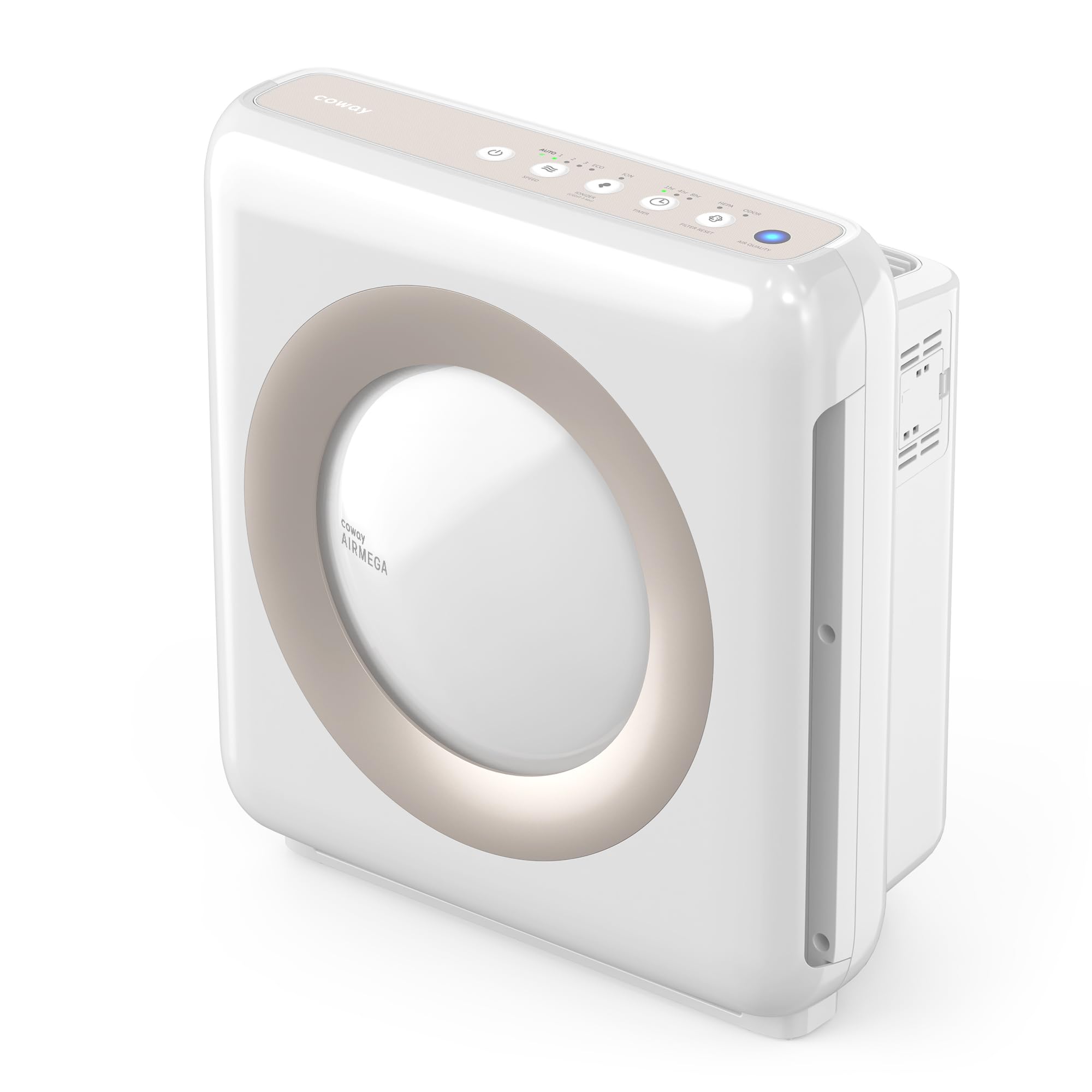
The pre-filter is the outer layer that catches hair, lint and larger dust before it reaches the HEPA. In most purifiers this is washable and reusable indefinitely. The Coway Airmega AP-1512HH "Mighty", the Winix 5510 and the Blueair Blue Pure 211i Max all have washable pre-filters.
How often to clean: every 2-4 weeks in a household with pets; every 4-6 weeks in a typical pet-free home. Rinse under cold water and let it dry completely before reinstalling. A damp pre-filter restricts airflow and can encourage mold growth inside the unit.
When to replace: in most cases, never. If the mesh is torn or the frame is cracked, replace it. Otherwise, clean and reuse.
True HEPA filter
The HEPA filter is the core element and the most expensive part to replace. It can't be washed; water damages the fibers and permanently reduces filtration efficiency.
Typical manufacturer interval: roughly 6-12 months, depending on the brand. Levoit says every 6-8 months for the Core 300-P. Medify rates the MA-40's filter at about 3,000 hours, which works out to about six months. Dyson rates the TP07's filter at about 12 months at 12 hours a day. In heavy-use conditions (pets, near a road, heavy cooking, old dusty house): toward the short end, or sooner. In light-use conditions (single occupant, low pollution, modern well-sealed house): toward the long end.
Activated carbon filter
The carbon layer adsorbs gases and odors, including VOCs from paints, cleaners and air fresheners, which the EPA says run 2 to 5 times higher inside homes than outside. Unlike HEPA, which physically traps particles and clogs gradually, carbon runs out chemically. Once its active sites are saturated it stops working, and there's no visible sign of this.
Typical interval: 3-6 months in high-odor homes (cooking, pets, smoking); 6-12 months in general use. Many combined HEPA + carbon filters are replaced together on the HEPA schedule, which is a practical compromise.
How to Tell If the Filter Needs Changing
Filter indicator or app alert. Many purifiers have a filter indicator. The Coway Mighty, the Coway Airmega 100 and the Medify MA-40 all do. If yours has one, follow it, and treat it as the latest you should replace rather than the earliest.
Reduced airflow. Hold your hand near the outlet. If the airflow feels noticeably weaker than when the purifier was new, the filter is clogged and restricting the fan.
Smells coming back while it's running. If odors the purifier used to handle are returning, the carbon is saturated.
Visible discoloration. HEPA filters turn gray or brown as they fill up. Light gray is normal; dark brown or black means heavy loading and is worth replacing even if the timer hasn't run out.
More fan noise. When a filter is clogged, the motor works harder to pull air through. If the purifier sounds louder than usual on the same setting, the filter may be restricting airflow.
Model-Specific Replacement Intervals
Where a model has no figure below, check the manufacturer's listing, and use the filter indicator if the unit has one.
| Model | Replacement interval | Filter setup | Notes |
|---|---|---|---|
| Levoit Core 300-P | 6-8 months | Replaceable main filter | No app or indicator in our specs; go by the calendar |
| Levoit Core 300S-P | Not listed | Same filter size as the Core 300 | Optional Toxin Absorber, Smoke Remover and Pet Allergy filters |
| Levoit Core 400S-P | Not listed | 3-in-1: pre-filter, HEPA-grade main filter, carbon | App-connected |
| Coway Airmega AP-1512HH "Mighty" | Not listed | Washable pre-filter, carbon deodorization filter, True HEPA | Filter indicator |
| Coway Airmega 100 | Not listed | Pre-filter, deodorization filter, HEPA | Filter indicator |
| Winix 5510 | Not listed | Washable pre-filter, carbon filter, True HEPA | App-connected |
| Blueair Blue Pure 211i Max | Not listed | Washable fabric pre-filter, HEPASilent main filter | App-connected |
| Medify MA-40 | About 3,000 hours (about 6 months) | H13 HEPA + carbon | Filter indicator |
| Dyson Purifier Cool TP07 | About 12 months at 12 hours/day | Sealed HEPA H13 | Replacement about $55-80 |
Adjusting for Your Conditions
The manufacturer's interval assumes a typical home. Adjust based on your actual conditions:
Shorter intervals (replace sooner) if:
- You have one or more pets that shed
- You cook with high heat often
- You live near a major road or industrial area
- The house is older with a lot of background dust
- You run the purifier 24/7 rather than 8-12 hours a day
- You've recently had construction, renovation or painting done
Longer intervals (can wait) if:
- Single occupant, no pets
- Low-pollution location (rural, low-traffic area)
- The purifier only runs during allergy season
- Modern, well-insulated house with little background dust
Third-Party Filters
Third-party replacement filters usually cost less than branded ones. The trade-off is that filtration efficiency may not match the original, and for H13-rated products, an unverified third-party filter may not meet the H13 standard even if it's labeled that way. A genuine True HEPA filter has to catch at least 99.97% of particles at 0.3 microns, and nothing on a generic box proves that.
For a purifier used to manage allergies or asthma, stick with branded filters. Verified filtration is the whole point. The Asthma and Allergy Foundation of America says air cleaners with its certified filters catch almost 98% of airborne allergen particles, and that kind of figure only holds for the filter that was tested.
For a purifier in a living room doing general dust reduction, where the exact efficiency matters less, third-party filters are a reasonable way to save money.
See our full breakdown of air purifier running costs for the complete cost picture, or the main air purifier roundup for product recommendations.