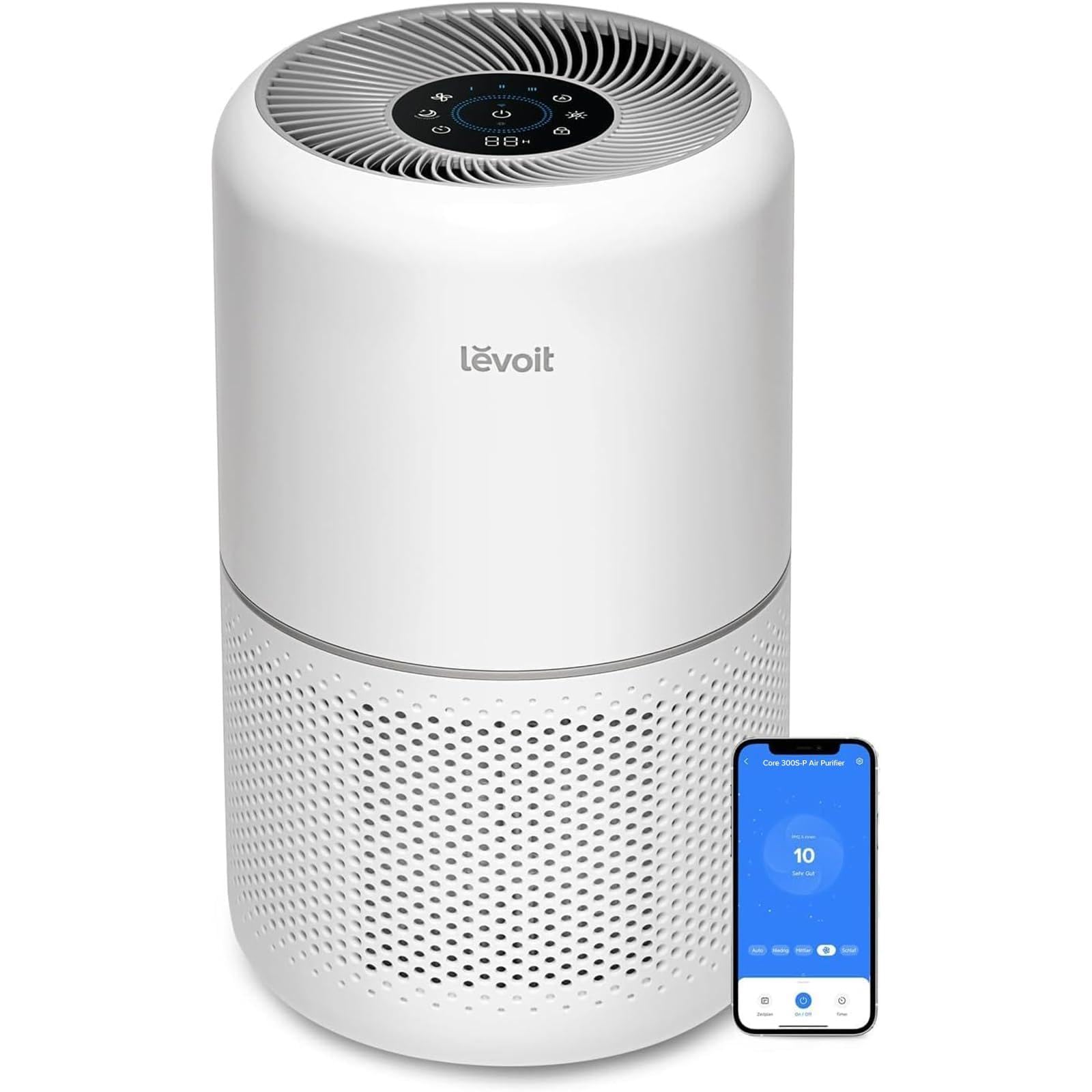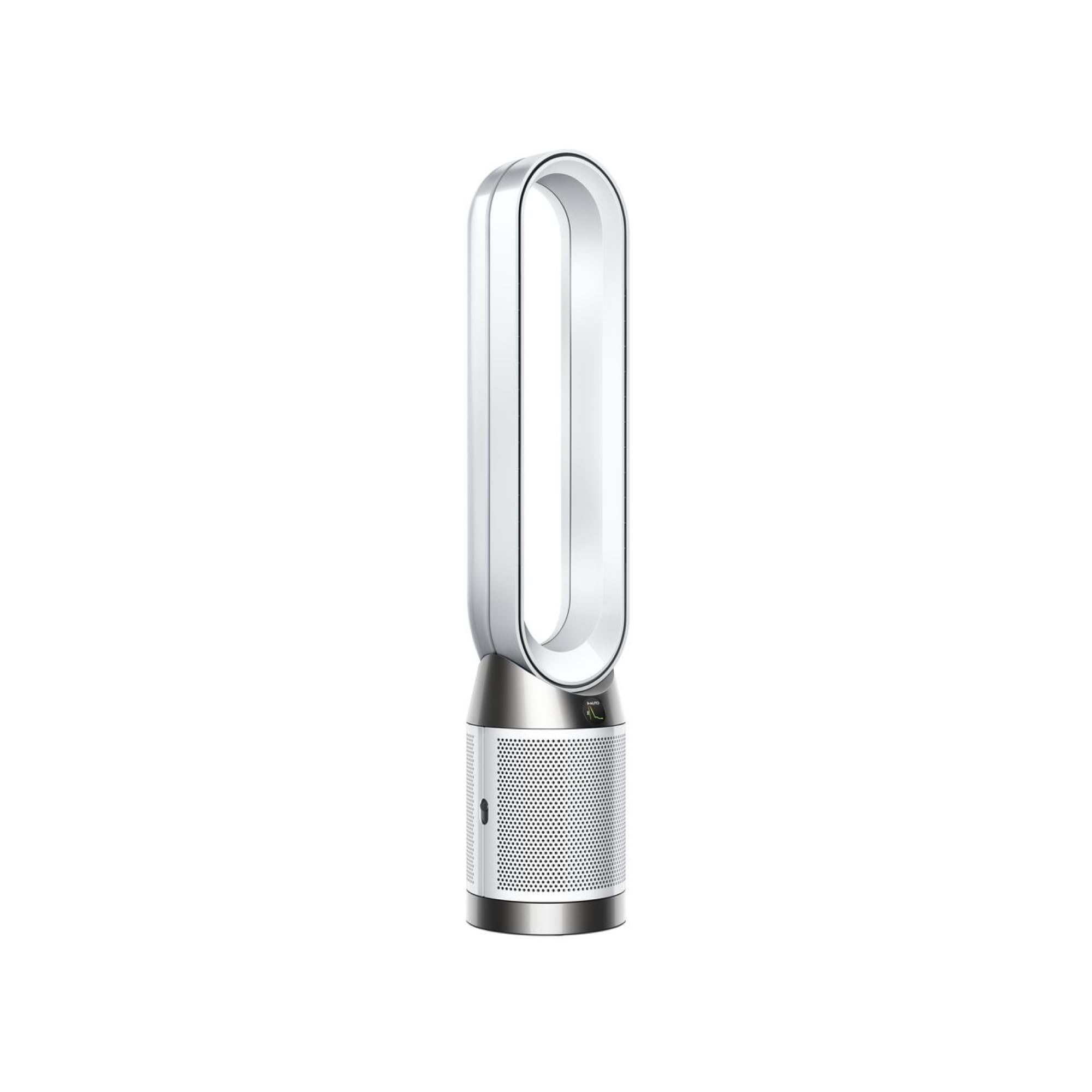
For most people the Levoit Core 400S-P (about $190) is the better buy. It has an AHAM-verified smoke CADR of 231 and runs at 24 dB, while the Dyson Purifier Cool TP07 (about $650) publishes no CADR at all. The Dyson makes sense only if you want a bladeless fan, a sealed H13 filter and a more detailed app.
Both are HEPA air purifiers with sensors, auto mode and app control. The question is whether the Dyson's extra $460 buys meaningfully better performance. Much of the Dyson's price goes on design, the brand, the built-in fan and the Dyson app. Its filtration is good, but Dyson doesn't publish a CADR, so there's no hard evidence it cleans a room faster than the Levoit at under a third of the price. Where it does pull ahead (the fan, the sealed filter design, a more detailed app), those advantages matter to some people and not at all to others.
Filtration Performance
The Dyson TP07 is fully sealed to HEPA H13 and captures 99.97% of particles at 0.3 microns, the same benchmark the EPA uses to define a HEPA filter. "Fully sealed" means Dyson claims air can't leak around the filter, so everything that goes in passes through it. The Levoit Core 400S-P uses a three-in-one filter: a pre-filter, a HEPA-grade main filter and activated carbon.
The bigger difference is in the published numbers. The Levoit has an AHAM Verifide CADR of 231 CFM for smoke, 240 for dust and 259 for pollen. That's an independent test of how much clean air comes out of the machine, and you can look the model up in the AHAM Verifide directory. The EPA's guide to air cleaners also tells shoppers to compare portable units by CADR. Dyson doesn't publish an AHAM CADR for the TP07. That makes a direct comparison harder, and it means you're relying on Dyson's own claims rather than a standard test.
Verdict: the Levoit has the numbers to back it up. The Dyson's sealed H13 filter is a real strength, but without a published CADR you can't say whether it cleans a room as fast.
Smart Features
Dyson MyDyson app: Clean and well designed. The TP07's sensors feed an LCD readout on the unit and the app, with readings for more pollutant types than just particles. It supports scheduling and auto mode, and works with Alexa, Siri and Google Assistant.
Levoit VeSync app: Less polished but does the job. It shows live PM2.5 data from the laser sensor (Levoit calls it AirSight Plus), supports scheduling, and works with Alexa and Google Assistant.
The Dyson gives you more kinds of air quality data. Most people won't need that much detail at home. If you want to know whether overall particle levels are improving, both will tell you.
Verdict: Dyson has the better app and display. The Levoit app is enough for most users.
Fan Function
The Dyson TP07 is a purifier and a bladeless fan. It oscillates up to 350°, so it can push air around a room and replace a separate fan in summer. It moves air around but doesn't chill it the way an air conditioner does. In winter you can switch it to backward airflow mode, which keeps purifying without blowing air at you.
The Levoit Core 400S-P is a purifier only. It moves air through the filter but doesn't project it across the room like a fan.
If you want one device that purifies all year and doubles as a fan in summer, the Dyson makes more sense. If you're happy running a purifier alongside a fan you already own, this difference doesn't matter.
Verdict: Dyson wins if you want the fan function. If not, you're paying for something you won't use.
Noise
This is where the old assumption that Dyson is quieter doesn't hold up. Third-party measurements put the TP07 at about 35 dB on speed 1. The Levoit Core 400S-P runs as low as 24 dB. On the decibel scale, that's a clear difference, and you'll notice it in a quiet bedroom.
The Dyson has a night mode and a sleep timer from 30 minutes to 8 hours. Both are usable in a bedroom.
Verdict: the Levoit is quieter at its lowest setting.
Running Costs
The Dyson TP07's replacement filter costs about $55-80 and lasts around 12 months at 12 hours a day. That's roughly $55-80 a year in filters.
We don't have a verified filter price or lifespan for the Levoit Core 400S-P, and filter prices move around, so check the current listing on Amazon.
Electricity is a small cost for both. At about 18 cents per kWh (close to the EIA's national residential average of 18.3¢ in July 2026; yours may differ), even a 50W draw for 8 hours a day works out to 0.4 kWh × $0.18 = about 7 cents a day, or roughly $2 a month.
The purchase price is what really separates them. The Dyson costs about $460 more up front. Even if its filter cost the same as the Levoit's every year, you'd never make that gap back.
Verdict: yearly running costs are modest for both, but the Dyson's higher purchase price makes total cost of ownership much higher over three to five years.
Summary
| Dyson Purifier Cool TP07 | Levoit Core 400S-P | |
|---|---|---|
| Price | ~$650 | ~$190 |
| CADR | Not published | Smoke 231, dust 240, pollen 259 CFM (AHAM Verifide) |
| Filtration | Sealed HEPA H13 | Pre-filter + HEPA-grade + carbon |
| Smart features | Multi-pollutant sensors, LCD, app | Laser PM2.5 sensor, app |
| Fan function | Yes (bladeless fan, 350° oscillation) | No |
| Noise (lowest) | ~35 dB (third-party) | 24 dB |
| Filter cost | ~$55-80/year | Check current price |
| App | MyDyson (polished) | VeSync (functional) |
| Amazon rating | 4.3★ (~600 reviews) | 4.7★ (~25,000 reviews) |
Get the Dyson if: you want a combined purifier and fan, you care about seeing several pollutant readings, design matters to you, or you like the idea of a fully sealed H13 filter.
Get the Levoit if: you want the most purification per dollar, you don't need the fan, you want the quieter low setting, and you're fine with an app that focuses on PM2.5. If the 400S-P is more than you need, the Levoit Core 300S-P costs about $150, runs as quiet as 22 dB, and has an AHAM Verifide CADR of 141 CFM for smoke. That's enough for a bedroom or medium room.
For most people, the Levoit Core 400S-P is the better buy. See our bedroom air purifier guide for quiet sleep-focused picks, our large room guide if you have a big space, or the full air purifier roundup for all options.