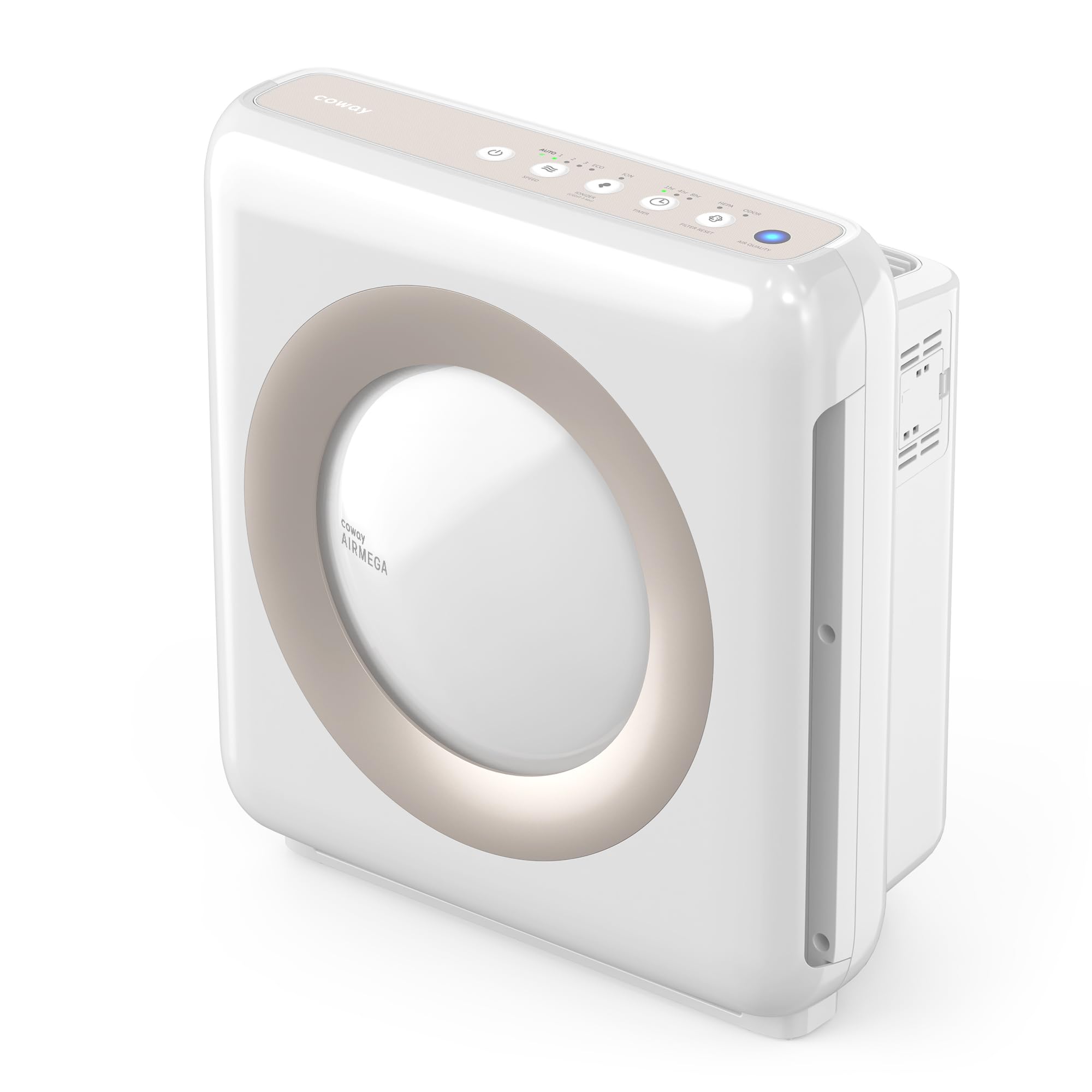
An air purifier costs roughly $4 to $47 a year in electricity. Most draw 7-15 W on sleep mode and 40-65 W flat out, so a 25 W unit on medium for 8 hours a day uses about 73 kWh, or around $13 a year at 18 cents per kWh. The replacement filter usually costs more than the power.
They're fans with filters: motors that move air rather than heat it. That puts them in the same bracket as a desk lamp or a Wi-Fi router, and far below a space heater, window AC unit or clothes dryer. Run one around the clock, though, and it does add up. ENERGY STAR puts a standard room air cleaner running continuously at about 394 kWh a year, which is more than some new refrigerators use. Here are the actual numbers.
Typical Wattage by Fan Speed
Most manufacturers list power draw on the spec sheet or the label on the base of the unit, usually at maximum speed. Sleep mode draws much less. The exact figure depends on the model, so check the label on yours; the ranges below are what you'll typically see on home purifiers.
| Fan setting | Typical draw |
|---|---|
| Sleep / lowest speed | 7-15 W |
| Medium | 20-35 W |
| Maximum | 40-65 W |
Larger purifiers sit at the top of each range. Models with auto mode move between these settings on their own, so their real-world average usually lands somewhere in the middle.
The Calculation
The formula is simple:
Cost = Watts ÷ 1,000 × Hours × Rate per kWh
For the rate, this article uses about 18 cents per kWh, close to the EIA national average of 18.3¢ for residential electricity in July 2026. Rates vary a lot by state (the EIA also publishes state-by-state profiles), so check your bill and swap your own figure in.
Usage Scenarios
All of these use generic wattages from the table above, not a specific model.
Sleep mode overnight (8 hours)
A small purifier at 7 W on sleep mode:
7 W ÷ 1,000 × 8 hours = 0.056 kWh × $0.18 = about 1 cent per night
Even running 24/7 on sleep mode, the yearly bill is small:
7 W ÷ 1,000 × 24 hours × 365 days = 61.3 kWh × $0.18 = about $11.05 per year
Medium speed, 8 hours a day
A purifier drawing 25 W on medium:
25 W ÷ 1,000 × 8 hours = 0.2 kWh × $0.18 = 3.6 cents per day
Over a year: 0.2 kWh × 365 = 73 kWh × $0.18 = about $13.15 per year
Medium speed, 24 hours a day
25 W ÷ 1,000 × 24 × 365 = 219 kWh × $0.18 = about $39.40 per year
Maximum speed, 8 hours a day
A larger purifier drawing 45 W on max:
45 W ÷ 1,000 × 8 hours = 0.36 kWh × $0.18 = about 6 cents per day
Over a year: 0.36 kWh × 365 = 131.4 kWh × $0.18 = about $23.65 per year
Summary
| Scenario | kWh per year | Cost per year at 18¢/kWh |
|---|---|---|
| 7 W, sleep mode, 8 h/day | 20.4 | ~$3.70 |
| 7 W, sleep mode, 24/7 | 61.3 | ~$11.05 |
| 25 W, medium, 8 h/day | 73 | ~$13.15 |
| 45 W, max, 8 h/day | 131.4 | ~$23.65 |
| 25 W, medium, 24/7 | 219 | ~$39.40 |
| 30 W, 24/7 | 262.8 | ~$47.30 |
Filter Replacement Costs
Electricity is only part of the yearly cost, and usually the smaller part. Filters are where the money goes.
How often you replace one depends on the model and how hard you run it. A few examples from current US listings:
| Model | Stated filter life |
|---|---|
| Levoit Core 300-P | Every 6-8 months |
| Medify MA-40 | About 3,000 hours (roughly 6 months) |
| Dyson Purifier Cool TP07 | About 12 months at 12 hours a day; replacements run about $55-80 |
| Coway Airmega AP-1512HH / Airmega 100 | Filter indicator light tells you when |
Filter prices move around a lot, so check the current price of the replacement before you buy the purifier itself. The yearly math is simple: filter price × replacements per year. A filter you swap every six months costs you twice its sticker price each year.
For comparison, a mid-size purifier on medium for 8 hours a day costs about $13 a year in electricity. The Dyson TP07's filter alone is $55-80 a year at 12 hours a day. On most purifiers, the filter bill is bigger than the power bill.
Total Annual Cost
Add the two together:
Yearly cost = electricity (from the scenarios above) + (filter price × replacements per year)
Say you run a purifier at 25 W on medium for 8 hours a day (about $13.15 in power) and its filter needs replacing every 6-8 months. That's roughly 1.5 to 2 filters a year, so the filter line will almost always be the larger number.
Running 24/7 on auto mode (which moves between sleep and higher speeds based on sensor readings) puts most people somewhere between the 8-hour and 24-hour figures for electricity. It also wears out the filter faster than a few hours a day would.
Tips for Reducing Running Costs
Buy an ENERGY STAR model. Certified room air cleaners are more than 50% more efficient than standard models, which ENERGY STAR estimates saves about 211 kWh a year when run continuously. The ENERGY STAR product finder lists certified models along with the room size each one suits.
Use auto mode. A purifier with an air quality sensor and auto mode runs slowly when the air is already clean and speeds up only when it needs to. That cuts the average wattage compared with leaving it fixed on medium. The Coway Airmega AP-1512HH "Mighty", for example, has an air quality sensor with auto mode plus a separate eco mode.
Sleep mode overnight. The gap between sleep mode (7-8 W) and medium (20-30 W) over 8 hours a night works out to 35-67 kWh a year, or roughly $6 to $12 at 18 cents per kWh. Not a fortune, but in a bedroom sleep mode is also quieter, so there's little reason not to use it.
Don't leave it on maximum. You rarely need max speed at home outside specific events, like heavy cooking or a high-pollen day with the windows open. Running flat out all the time can roughly double the electricity compared with medium and wears the filter out faster.
Close the door. A purifier is sized for a room. With the door open to the rest of the house, it's trying to clean a much bigger volume of air and never catches up. Shut the door to the room you're treating.
See our full air purifier roundup for product recommendations, or our guide on how often to change an air purifier filter for the other half of the running cost equation.