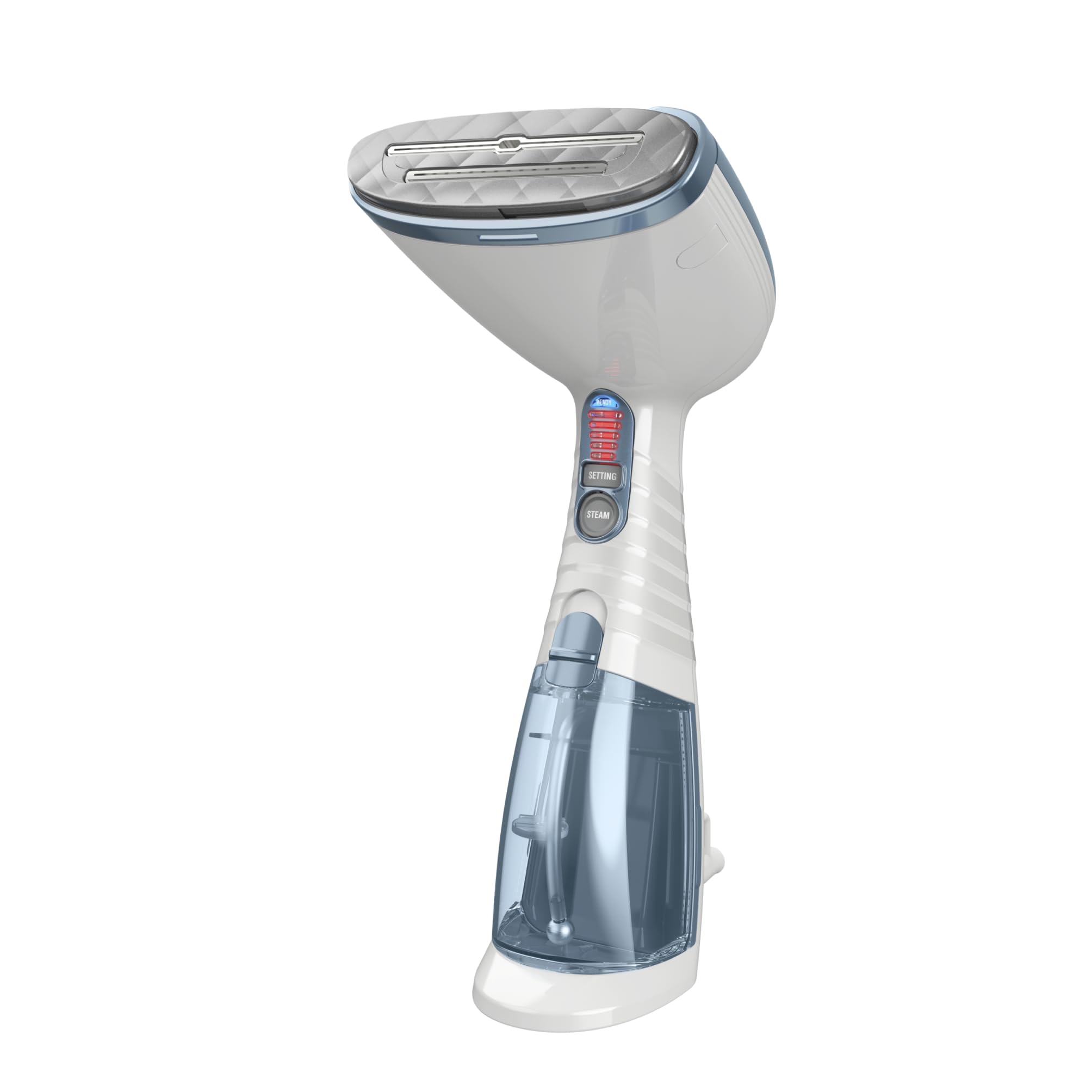
A clothes steamer is better for quick touch-ups, delicates, curtains and travel: it's ready in about 15 to 40 seconds and needs no board. An iron is better for sharp trouser creases, crisp collars and heavy cotton, because it presses the fabric as well as heating it. Most people who buy a steamer keep their iron.
Plenty of people would rather do almost anything than iron, which is why handheld clothes steamers (also called garment steamers) have gone from niche travel gadget to something a lot of homes keep in a closet.
The marketing doesn't help, though. Some brands talk as if you can throw your iron out tomorrow. You can't. Steamers and irons do different things. The real clothes steamer vs iron question is which of those things you need done on a Tuesday morning when you're already running late.
How they actually work (and why it matters)
An iron presses heated metal against fabric. Heat, moisture from the steam setting and physical pressure flatten the fibers and hold them in place. That pressing is what gives you a sharp crease down a trouser leg or a collar that sits flat.
A steamer does none of that. It pushes hot steam into the fabric, the fibers relax, and the wrinkles drop out under the weight of the garment. No pressing, no hot plate on the fabric. You hang the thing on a door and work the steamer down it.
That small difference is the whole reason one works where the other doesn't. For technique, there's a separate guide on how to use a handheld clothes steamer.
Where a steamer beats an iron
It's faster to get going. Handheld steamers are ready in roughly 15 to 40 seconds, and you skip setting up the board. When you need one shirt sorted before you leave, that matters.
You don't need an ironing board at all. Steam on the hanger, on a door hook, wherever the garment hangs. In a small apartment where the board means rearranging the living room, that alone might decide it.
Delicate fabrics are safer. Silk, chiffon and thin synthetics can scorch under an iron even on a low setting. A steamer doesn't have to touch the fabric.
There are jobs an iron can't do at all: curtains while they're hanging, a suit jacket on the back of a chair, sofa cushion covers.
Travel is the obvious one. A compact steamer fits in a carry-on, and hotel irons are hit and miss.
And there's freshening. A quick pass of steam helps with light odors on a sweater or blazer that doesn't need a full wash, which means fewer trips to the washer or the dry cleaner.
Where an iron still wins
Sharp creases. A steamer can't produce a crisp line down a trouser leg or a knife-edge pleat. If your workplace expects that, you need an iron.
Shirt collars and cuffs are the same story. A collar needs pressing against something hard to sit flat and look structured. Steamed, it comes out soft. That's fine for a casual shirt and not fine for a client meeting. Steamers with a heated plate, like the Conair Turbo ExtremeSteam, narrow the gap a little.
Heavy fabrics push the iron's advantage further. Thick cotton, denim and heavy linen need direct heat and pressure to give up their creases, especially deep wrinkles from the dryer. A steamer improves them but rarely finishes the job.
Precision matters too. An iron puts heat exactly where you want it, which helps with pleats, seams and structured details. Steaming relaxes the whole garment more generally.
For bedsheets and tablecloths, a board and an iron are quicker. Large flat items are what the board was designed for.
Clothes steamer vs iron: full comparison table
| Steamer | Iron | |
|---|---|---|
| Ready to use | About 15-40 seconds | Longer, plus board setup |
| Ironing board | Not needed | Required |
| Sharp creases | Can't do this | Yes |
| Delicates | Very safe | Scorching risk |
| Shirt collars | Softens, doesn't crisp | Crisp and flat |
| Curtains and upholstery | Ideal | Impractical |
| Heavy cotton and denim | Partial | Full crease removal |
| Travel | Fits a carry-on | Not practical |
| Freshening without washing | Yes | No |
| Running cost | Short sessions | Longer sessions |
| Storage | Compact, no board | Iron plus board |
| Typical Amazon price | About $25-$75 for handhelds | Varies widely |
So which one do you actually need?
A steamer covers most of what you need if you mostly wear casual or smart-casual clothes, hate the ironing board, travel a fair amount, own a lot of delicates, or live somewhere small. It won't replace an iron for dress shirts or creased trousers, but for everything else it's faster and less annoying.
If your mornings involve dress shirts with pressed collars or tailored trousers, or you do a weekly pile for the whole household, keep the iron. A steamer will disappoint you on those jobs.
Most people who buy a steamer don't get rid of the iron. They use the steamer most days for quick jobs and bring the iron out every couple of weeks for the formal stuff.
A decent handheld steamer runs about $25 to $75. The HiLIFE 700W costs about $25 and has more than 131,000 Amazon ratings. It's best on lighter fabrics. If you want more power and a plate you can press collars against, the Conair Turbo ExtremeSteam is about $67 for 1875W. There's a full rundown in the best handheld clothes steamer guide.
What about steam generator irons?
Steam generator irons sit between a standard iron and a steamer. A separate water tank feeds high-pressure steam to an iron soleplate, so you get the pressing of an iron with more steam than a handheld unit.
They're bigger, cost more than a regular iron, and need somewhere to live. For households that iron a lot they can shorten sessions noticeably. They don't replace the grab-and-go convenience of a handheld steamer when you need one thing sorted quickly.
Running costs: steamer vs iron
Wattage is in the same range for both. Handheld steamers on Amazon run from about 700W to 1,875W, and most full-size irons sit between about 1,000W and 1,800W. The difference is time. An ironing session might run 30 to 60 minutes. Steaming one or two garments takes a few minutes.
Here's the math at the US average residential electricity rate of around 18 cents per kWh (EIA figures for July 2026; yours may differ):
- 1,500W steamer for 4 minutes: 1.5 kW × 4/60 h = 0.1 kWh, about 1.8 cents
- 1,700W iron for 30 minutes: 1.7 kW × 0.5 h = 0.85 kWh, about 15 cents
Neither will move your bill much. Irons and steamers cycle their heating elements, so real use is usually a bit lower than these figures.
Fabrics you should never steam
Avoid steaming:
- Suede and leather: steam leaves water marks and can damage the finish
- Waxed cotton: steam melts the wax coating
- Vinyl and faux leather: warps or bubbles under heat
- Silk velvet or rayon velvet: water marks these permanently (cotton and polyester velvet are fine)
- Fur, real or faux: steam mats the fibers
- Anything labeled dry clean only, unless you know the fabric handles moisture
Test on an inside seam first if you're not sure. For fabric-specific techniques, including silk and velvet, see the how to use a handheld clothes steamer guide.
Hard water and steamers
Both irons and steamers suffer in hard water, which is common in much of the US. Heat it and the dissolved calcium and magnesium form scale. Over time the scale clogs the steam vents, the unit starts spitting water, and eventually it stops working.
Check your manual. Some makers are fine with tap water unless it's very hard, and others suggest a tap and distilled mix. If your water is hard, distilled water from the grocery store is cheap and lasts weeks in a small steamer tank.
Clothes steamer vs iron: the verdict
They solve different problems, so neither fully replaces the other.
If you can only buy one, match it to your wardrobe. Casual clothes, a small apartment, frequent travel and a hatred of ironing boards point to a steamer. Formal shirts, sharp creases and a weekly household pile point to an iron.
If you can have both, get both. The steamer does the daily quick jobs, and the iron does the rest.
FAQ
Can a clothes steamer replace an iron?
Not entirely. A steamer handles quick wrinkle removal on casual clothes, delicates, curtains and travel. It can't produce sharp trouser creases or crisp shirt collars. Most people use both.
Is steaming better than ironing for shirts?
For casual shirts, yes. It's faster and needs no board. For formal dress shirts where you need a crisp collar and structured cuffs, an iron is still better.
Do clothes steamers use a lot of electricity?
No. Four minutes with a 1,500W steamer costs about 1.8 cents at the US average residential rate. Half an hour with a 1,700W iron costs about 15 cents.